Skip to content

There are significant differences between 3-tab and architectural shingles. Sure, they are both asphalt roofing products, but you will find their performance, look, and longevity to be quite distinct.
It was not long ago that 3-tab shingles were the standard choice for residential roofs; they have been the standard for decades. Today, you are more likely to see architectural shingles on many homes. Their superior durability and the way they enhance a home’s curb appeal have made them the market leader. If you want to make the most of your roofing investment, it helps to know what sets them apart.
3-Tab vs Architectural Shingles: A Comparison
| Feature | 3-Tab Shingles | Architectural Shingles |
| Construction | Single-layer asphalt | Multi-layer laminated asphalt |
| Look | Flat and uniform | Textured and dimensional |
| Curb Appeal | Basic | Premium |
| Thickness/Weight | Thinner and lighter | Thicker and heavier |
| Lifespan | 15–20 years typically | 25–30+ years |
| Wind Resistance | 60–70 mph | 110–130 mph |
| Hail | Standard protection | Better impact (Class 4 options) |
| Weather | Fine for moderate conditions | Handles severe weather well |
| Maintenance | More repairs down the road | Fewer needed generally |
| Style/Color | Limited | Wide selection |
| Energy Efficiency | Some select products | Many product lines |
| Cost to Install | Lower | Higher |
| Resale Appeal | Standard | More attractive to buyers |
| Long-Term Value | Lower | Higher |
| Best For | Rentals, budget-conscious owners, outbuildings | Long-term owners, storm country, premium re-roofs |
Quick Summary of the Contenders
If you are looking for the lowest cost up front, 3-tab is your answer. But for everything else, from wind and hail resistance to looks and resale value, architectural shingles generally provide greater value and a longer lifespan.
For an Oklahoma homeowner in particular, architectural shingles are often the preferred choice. You get a more attractive roof that offers strong protection against high winds and hail over the long term.
Understanding 3-Tab Shingles
You will find these traditional asphalt shingles on millions of U.S. homes. They are a single-layer item with cutouts to give the illusion of three tabs. The design creates a uniform appearance across the roof.
Their popularity has always been driven by affordability. With less material involved, they are cheaper to put on, which is why they make practical sense for a rental or if you are working with a limited budget. However, there is a compromise associated with that affordability. Being a single layer of asphalt means they won’t last as long or hold up to the wind as an architectural shingle will.
Understanding Architectural Shingles
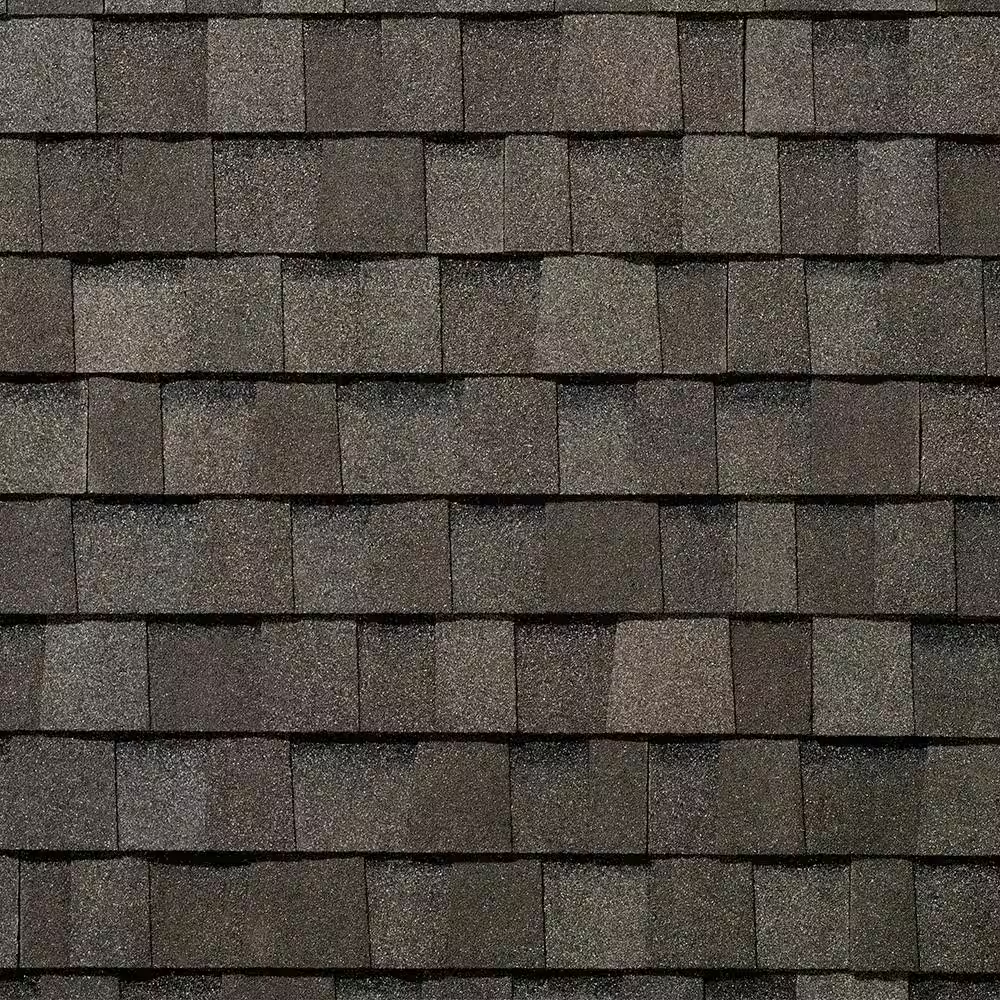
Also known as dimensional or laminated shingles, these are built up with several layers of fused asphalt. The extra thickness gives them weight and a premium appearance. Where a 3-tab is flat, an architectural shingle has depth and shadow, creating an appearance similar to materials such as slate or cedar shake.
They are simply more durable and better for withstanding the elements. Both contractors and homeowners increasingly prefer them for this reason, and they now account for most new residential roof installations in many markets.
Appearance Comparison
In the end, the visual difference is often the most noticeable distinction. A 3-tab roof has a consistent pattern because every piece is the same size and shape. It works for some, but it lacks the visual depth of modern alternatives. An architectural shingle, with its varied shapes and layered build, offers a richer texture and is the more attractive option for homeowners seeking enhanced curb appeal.
Durability and Weather Resistance
When you put 3-tab vs architectural shingles side by side, durability is often the deciding factor.
Wind Performance
You will find that conventional 3-tab shingles are rated for winds in the 60 to 70 mph range, with a few better products going a bit higher. Architectural shingles offer considerably stronger performance; if you follow the manufacturer’s installation guidelines, they can hold up to 110 or even 130 mph. This level of wind resistance can be particularly beneficial in areas prone to severe thunderstorms or hurricane conditions.
Impact Resistance
The extra heft and thickness of an architectural shingle make it more resilient against hail and debris carried by strong winds. There are premium options on the market with Class 4 impact ratings, which represent the highest impact rating available for asphalt roofing. You won’t get that same degree of protection from a standard 3-tab.
How They Age
Architectural shingles generally maintain their appearance for a longer period. The thicker build withstands exposure to sun, temperature changes, and general weathering better than the thinner 3-tab variety.
Lifespan
Of course, how long a roof lasts has to do with climate, maintenance and how well it was put on. But there is a clear distinction between the two. In normal circumstances, you can expect 15 to 20 years out of most 3-tab shingles, less so in severe weather. A properly maintained set of architectural shingles can last 25 to 30 years and sometimes more. For homeowners planning to remain in their homes long term, the extended lifespan often justifies the higher cost.
Cost
Some homeowners choose 3-tab shingles primarily because of cost. They have a lower price to buy and install, which is attractive when you want to keep upfront expenses to a minimum.
Then again, architectural shingles offer better value over time. Sure, they are more expensive initially, but their durability means you are not replacing your roof as often and you may save on repairs after a storm. Over a few decades, the lifetime cost of an architectural roof is frequently lower.
Energy Efficiency
Don’t think either type will make your roof energy-efficient on its own, though both come in reflective colors to reduce heat gain. The added thickness of the architectural style does provide a modest advantage in thermal performance, but your attic insulation and ventilation are far more important factors. If cooling costs are a concern, look at the whole roofing system, not just the shingles.
Curb Appeal and Home Value
Your roof plays a major role in your home’s appearance. With their dimensional profile, architectural shingles have a more premium appearance that many buyers consider an upgrade over the traditional 3-tab. It can help a property become more appealing to potential buyers and improve resale value.
3-Tab Vs Architectural: Which Is Right for You?
The answer depends on your priorities. Need a practical roofing solution for a short period of ownership and want to limit your expenses? 3-tab shingles can meet those needs. But for the modern homeowner wanting a mix of looks, performance, and long-term durability, architectural shingles are generally the better investment.
In the end, the decision is essentially a balance between performance and cost for 3-tab vs architectural shingles. 3-tab shingles are the budget-friendly option, but in terms of appearance, wind resistance, impact resistance, and longevity, architectural shingles offer a higher level of performance. They require a greater upfront investment, but for the long-term protection and curb appeal they provide, they remain the preferred option for most homeowners