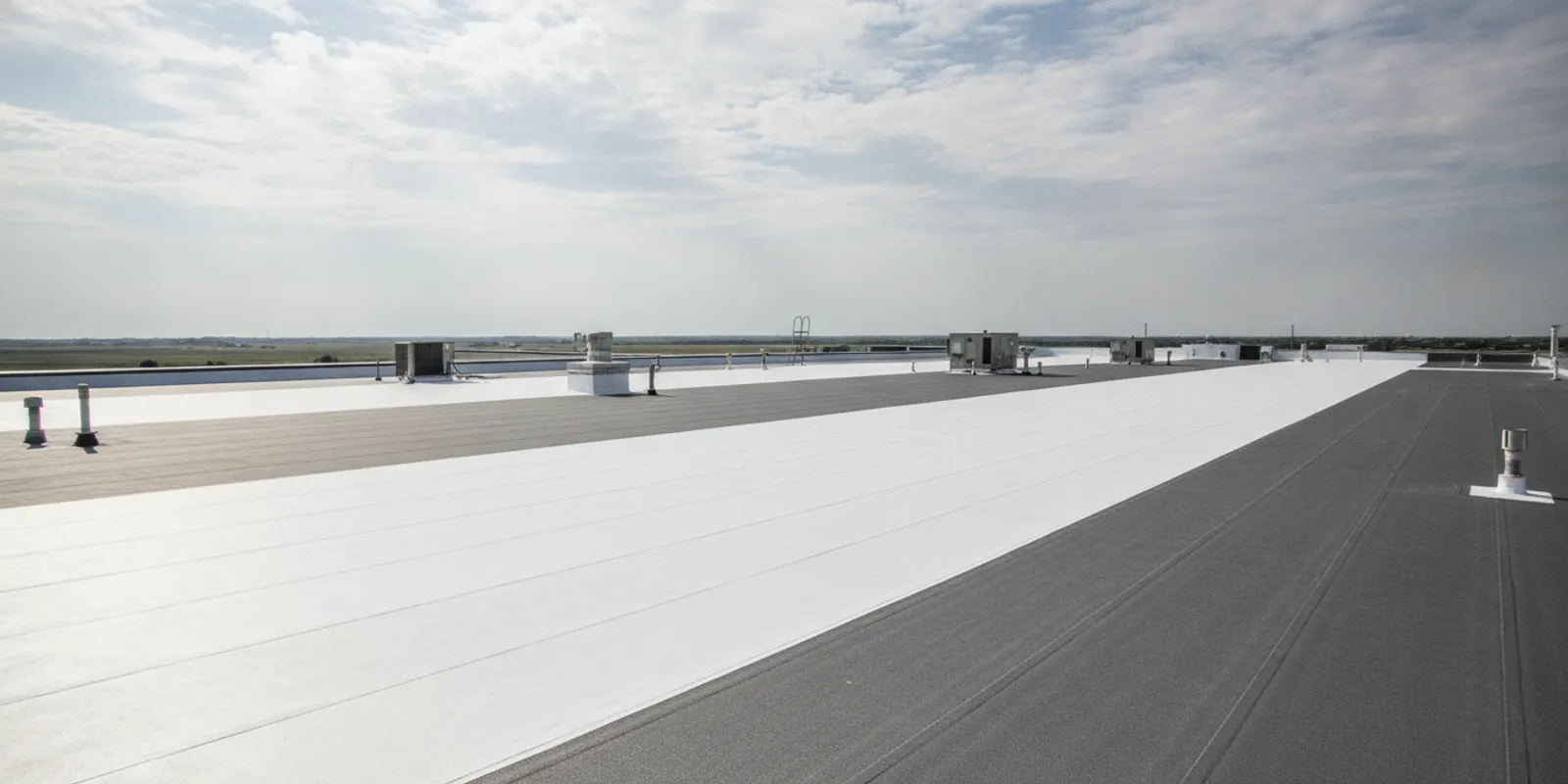

A low estimate can look appealing, but does it include tear-off, disposal, insulation, flashing, and repairs? Those details can make a major difference when you compare commercial roof replacement cost. The total also depends on the roof system, building access, drainage, and the condition of the layers beneath the surface. This guide breaks down common commercial roofing price ranges and explains what to look for in a written proposal. You’ll also learn how to compare bids by scope, materials, warranties, and schedule, so you can make a decision based on the work your building actually needs, not just the number at the bottom.
Key Takeaways
- Use published price ranges for early planning only: Roof size, materials, access, and hidden damage all affect the final cost, so request an on-site estimate.
- Compare proposals line by line: Confirm what each bid includes, review exclusions and warranty terms, and ask how unexpected repairs will be priced and approved.
- Protect your roof investment over time: Schedule inspections, address leaks and storm damage promptly, and weigh repair costs against replacement and future maintenance.
What Does Commercial Roof Replacement Cost?
Commercial roof replacement costs vary with the roofing system, roof condition, access, and work included in the project. Published price ranges can help you start a budget, but an on-site assessment is needed to estimate costs for a specific building. OKC Roofers offers a range of roofing services for property owners in Oklahoma City and nearby communities.
Typical costs by roofing system and square foot
A general estimate for commercial roof replacement is about $5.50 to $18 per square foot installed, with some metal roofing projects costing more. One industry guide estimates TPO at $6 to $10 per square foot, EPDM at $5.50 to $8.50, modified bitumen at $7 to $11, built-up roofing at $8 to $14, and metal roofing at $10 to $18 or more. See Windward Roofing’s cost guide for its system-by-system ranges.
For a 10,000-square-foot roof, those figures suggest a rough range of $55,000 to $180,000 or more. Use that only as an initial planning figure, not a quote. Roof complexity, existing damage, insulation requirements, and installation conditions can all change the final price.
Budget for the full project, not just materials
Roofing material is one part of a replacement budget. Labor, equipment, removal of the old roof, disposal, insulation, flashing, and repairs may also contribute to the total. A bid that lists only the cost of a membrane or panels may not reflect the full scope of work needed to complete the project.
It can also help to compare replacement with continued repairs. Repairs may cost less upfront, but repeated work can add up, especially if leaks or underlying damage persist. Highland Roofing’s repair-versus-replacement cost discussion explains why the choice can have a significant effect on a property’s budget. Ask contractors to describe the options, expected work, and cost assumptions for your building.
Confirm the price covers tear-off, disposal, insulation, flashing, and repairs
Before comparing bids, confirm that each one covers the same work. One contractor may include tear-off and disposal, while another may list them as additional costs. Insulation, flashing, roof-edge details, and repairs to the roof deck can also vary from estimate to estimate. These differences can affect the total price and the performance of the finished roof.
Request an itemized proposal that separates included work from possible extra charges. Ask how the contractor will handle hidden damage discovered after removal begins, and whether the bid includes an allowance for repairs. Published ranges may include materials, insulation, flashing, labor, tear-off, and disposal, but individual estimates can define their scope differently. Windward Roofing’s cost breakdown offers a useful list of items to check.
Use online averages as estimates, not quotes
Online price ranges are useful for early budgeting, but they cannot account for the details of your building. Estimates may also differ by source and roofing system. For example, some guides provide a broad range across multiple systems, while others describe a higher starting point for standard replacement projects. Location, roof condition, access, and included work all influence the price.
Treat published averages as benchmarks, not guaranteed costs. For a realistic estimate in Oklahoma City or a nearby community, request an on-site inspection and a written proposal based on your roof. Have the contractor identify the materials, work included, exclusions, and conditions that could change the price. This makes it easier to compare bids on scope as well as total cost.
What Drives Commercial Roof Replacement Costs?
A commercial roof replacement estimate depends on more than the building’s square footage. Roof design, existing layers, material selection, access, and local requirements all affect how much work a project involves. One industry estimate places fully installed commercial roof replacement at about $5.50 to $18 per square foot, but that range is only a broad reference. The actual price depends on the building and the work required. Windward Roofing breaks down the factors included in its cost range, such as roofing materials, labor, tear-off, and disposal.
For Oklahoma City property owners, weather exposure and the condition of the roof also deserve close attention. Wind and hail may affect material and installation choices, while hidden damage can change the scope after removal begins. A contractor should inspect the roof, explain potential complications, and provide an itemized estimate before work starts. When you compare proposals, look beyond the bottom-line price: check what each contractor includes, what may cost extra, and how the work will be scheduled around your building’s needs.
Roof size, shape, slope, and penetrations
Roof size is a major cost factor because larger areas generally require more material and labor. Still, square footage alone doesn’t determine the price. Multiple roof levels, changes in slope, unusual angles, and hard-to-reach sections can make a project more complex than a simple, open roof of similar size.
Every pipe, vent, skylight, or HVAC unit that passes through the roof adds detail to the installation. These penetrations need suitable flashing and careful sealing to help keep water out. Crews may also need to work around rooftop equipment or protect it during construction.
Ask the contractor to document the roof’s dimensions and identify areas that require extra work. A detailed inspection and scope can explain why two buildings with similar square footage may receive different estimates.
Building height, equipment access, and site logistics
A building’s height and layout affect how crews, materials, and equipment reach the roof. Tall buildings may require cranes or specialized lifting equipment. Limited space for deliveries, material storage, or dumpsters can add time and coordination, especially at busy commercial properties.
The building’s daily operations also matter. If tenants, employees, or customers will remain on-site, the contractor may need to plan around entrances, parking, safety zones, and noise. Restricted access or work outside normal hours can affect labor and scheduling. Gle Associates explains how building height, access, and occupancy can affect replacement costs.
During the inspection, point out access restrictions and describe how the property is used. Ask how deliveries, staging, work hours, and safety measures appear in the estimate. This helps you understand both the project cost and its likely impact on daily operations.
Existing roof condition, tear-off, and hidden damage
The existing roof’s condition can change the project scope once removal begins. Beneath the visible surface, a contractor may find damaged decking, wet insulation, deteriorated cover board, or other problems. These issues aren’t always apparent before tear-off, so the final cost may change if additional repairs are needed.
Ask whether the proposal includes removing and disposing of the existing roof, and how it addresses concealed damage. A clear estimate should state which repairs are included, how additional work will be priced, and how you’ll approve changes before crews proceed. Gle Associates notes that damage to underlying roof layers may become clear only after removal.
Share the history of recurring leaks, visible damage, and past repairs before the inspection. Photos and maintenance records can help the contractor assess problem areas and explain what may need closer attention.
Materials, labor, installation, and warranty needs
Roofing systems differ in upfront cost, installation requirements, maintenance needs, and expected service life. The right option depends on the building’s structure, roof design, drainage, and use. A lower material price may not mean a lower overall project cost if the system requires more labor or isn’t suitable for the roof.
Review the estimate for details about materials and installation. It should identify items such as insulation, flashing, fasteners, edge details, and work around rooftop equipment. Labor costs can vary with the system’s complexity and the installation steps it requires.
Ask what the manufacturer’s warranty covers, what the contractor’s warranty covers, and whether specific installation or maintenance requirements apply. Gle Associates outlines how the roofing system can affect cost, durability, warranty, and useful life. Compare the full scope of work rather than judging proposals by material price alone.
Drainage, insulation, code compliance, and energy upgrades
Poor drainage can contribute to standing water, leaks, and premature wear. A replacement project may need to address roof drains, scuppers, gutters, or slope. If water collects in particular areas, ask the contractor to identify the cause and explain whether the proposed work will improve drainage.
Insulation and ventilation can affect both project scope and building performance. Depending on the existing roof and applicable requirements, the replacement may call for changes to insulation or other parts of the roof assembly. Local building codes can also affect permitted materials and installation methods. Gle Associates describes how regulations may affect insulation, roof layers, ventilation, and slope.
If you’re considering energy-related upgrades, ask the contractor to list their costs and expected benefits separately. This makes it easier to compare the required replacement work with optional improvements and decide which fit your building and budget.
Oklahoma City wind, hail, weather, and material availability
Commercial roofs in Oklahoma City face wind and hail exposure, as well as sudden changes in weather. These conditions make material selection and installation details important. Ask how the proposed system suits your building, and what the manufacturer specifies for fastening, flashing, and other components. Requirements vary by product and location, so confirm the applicable code and design criteria for the property.
Severe weather can also affect project planning. Storms may increase demand for roofing crews and materials, while damage found during an inspection may change the scope. If you suspect wind or hail damage, arrange an inspection and keep photos and records. OKC Roofers provides details about its storm damage services, including support for property owners assessing roof damage.
Material availability can affect both price and timing. Ask whether the selected product is in stock, when delivery is expected, and whether an alternative would change the project cost, installation details, or warranty.
Project timing and scheduling
The time of year and the contractor’s schedule can affect crew availability, labor planning, and material delivery. During busy periods, you may wait longer for an inspection or installation. Weather can interrupt work as well, so the schedule should account for conditions that could delay tear-off or leave part of the roof exposed.
Request a schedule that outlines the expected start date, major work stages, and estimated completion. If your business will stay open during construction, confirm how the crew will manage access, noise, deliveries, and cleanup. You may also need to coordinate work with tenants or plan around periods when the building is less busy.
Seasonal demand may influence pricing, but timing alone shouldn’t determine which proposal you accept. Roofed Right America discusses how scheduling can affect commercial roofing prices. Compare each bid’s scope, materials, and timeline, then ask the contractor to explain any cost changes related to timing or product availability.
How Do Commercial Roofing Materials Compare?
Choosing a commercial roofing material starts with the roof itself. A membrane designed for a low-slope roof may not suit a steep one, and factors like drainage, rooftop equipment, insulation, and the building’s structure can rule out certain systems. Oklahoma City’s heat, wind, and hail exposure also make it important to consider how a material and its installation details will perform in local conditions.
Compare more than the material price. A complete estimate may include removing and disposing of the old roof, insulation, flashing, drainage work, and repairs to the roof deck. Ask each contractor to specify the proposed system, explain why it fits your building, and list what the price includes. Broad online cost ranges can help you prepare, but they are not quotes for your property.
OKC Roofers provides roofing services in Oklahoma City. An on-site assessment can help identify the roof’s condition and clarify which options may be appropriate. If hail or wind has affected the building, ask the contractor to document visible damage and explain whether repair or replacement should be considered before you compare bids.
Compare TPO and EPDM costs, energy performance, and maintenance
TPO and EPDM are single-ply membranes often used on low-slope commercial roofs. TPO typically costs about $6 to $10 per square foot, while EPDM is often estimated at $5.50 to $8.50 per square foot. These are broad figures; the final price depends on project scope, roof condition, and installation requirements. Windward Roofing’s cost guide provides these ranges for comparison.
TPO is commonly white and reflective, which may help reduce heat absorption. EPDM is usually black, though coatings and lighter-colored options may be available. Both systems need periodic checks for punctures, seam issues, and problems around drains or rooftop equipment. Ask how the membrane will be attached, what insulation is included, and what maintenance the manufacturer recommends for your building.
Factor in built-up roofing’s layered installation and system requirements
Built-up roofing, or BUR, combines layers of bitumen and reinforcing fabric, often with a protective surface on top. Its layered construction can create a sturdy roof assembly, but installing those layers generally takes more time and labor than installing a single-ply membrane. Estimates range from about $8 to $14 per square foot, according to Windward Roofing.
Before choosing BUR, confirm that the building can support the system and that the proposal accounts for the full assembly, including insulation, flashing, and edge details. Drainage matters, too: ask how the design will direct water toward drains and prevent persistent ponding. Discuss installation time, site access, and any disruption to building operations so you can plan around the work.
Weigh metal roofing type, design, durability, and long-term value
Metal roofing costs vary with the type of metal and panel design. A broad estimate is $10 to $18 or more per square foot. Standing-seam systems typically cost more than exposed-fastener panels, while premium materials such as copper or zinc can increase the price. Windward Roofing’s estimates put potential metal roof life at 40 to 60 years or more, depending on the system and conditions.
A long service life may make metal worth considering, but look closely at the full specification. Ask about panel gauge, finish, fasteners, seams, flashing, and the system’s suitability for your roof’s design and local wind exposure. Make sure the estimate names the proposed panel type rather than using a general label. Compare warranty terms and expected maintenance alongside the installation cost.
Use asphalt shingles only on suitable sloped commercial roofs
Asphalt shingles can be an option for a commercial building with a suitable pitched roof. They are generally not intended for low-slope roof surfaces, so confirm the roof meets the shingle manufacturer’s slope and installation requirements. One published estimate puts commercial asphalt shingles at about $3.50 to $7 per square foot, but actual prices depend on project details. See Gle Associates’ cost guide for more context.
The material price is only one part of the decision. Ask whether the estimate includes underlayment, ventilation, flashing, and any needed deck repairs. Discuss wind resistance and how the contractor would address damaged or missing shingles. If the building has both sloped and low-slope sections, have the contractor assess each area separately; different roof sections may need different systems.
Compare service life, repair needs, warranties, and roof compatibility
To compare systems fairly, consider expected service life alongside upfront cost, repair needs, and warranty coverage. The roof’s slope, drainage, structure, and existing conditions all affect which materials are suitable. An on-site assessment can help identify those factors and whether replacement, repair, or another approach is worth discussing.
Routine care can also influence how long a roof performs. Mint Roofing’s maintenance guidance notes that consistent inspections and timely repairs can help extend a commercial roof’s service life. Ask what maintenance the manufacturer recommends, whether repairs affect warranty coverage, and whether the warranty covers materials, workmanship, or both. Then compare those details across estimates, along with the complete project scope, rather than choosing based on the lowest price alone.
How Can You Get a Reliable Commercial Roof Replacement Quote?
A reliable commercial roof replacement quote should make three things clear: what the inspection found, what work the contractor recommends, and how the price was calculated. An on-site assessment matters because roof size, drainage, equipment, access, and concealed damage can all affect the scope. Online cost averages may help you plan, but they cannot account for your building’s specific conditions.
Before requesting bids, collect roof plans, repair records, leak details, and any priorities for the project. Ask contractors to provide written, itemized proposals, then compare the work and assumptions behind each price. Getting at least three bids can help you understand the range of solutions available, but the lowest number is not automatically the best choice. Holcim Elevate recommends comparing multiple proposals, including their materials, workmanship, and warranty terms.
For property owners in Oklahoma City and nearby communities, clear documentation is especially useful after wind or hail. Ask for photos and a written explanation of any recommended repairs or replacement. OKC Roofers offers free 18-point inspections, so you can ask about an inspection as you begin gathering information.
Request an on-site inspection and itemized estimates
Ask each contractor to inspect the roof in person before preparing a detailed quote. The inspection should consider the roof surface, seams, flashing, drainage, penetrations, and visible signs of moisture or deterioration. For a large or complex building, confirm how the roofer will access the roof and whether the inspection will cover hard-to-reach areas.
Request an itemized estimate that separates major costs, such as labor, materials, tear-off, disposal, and repairs. That breakdown helps you see what the price includes and makes it easier to compare bids. It also gives you a clear basis for follow-up questions. Holcim Elevate’s contractor guidance recommends requesting multiple proposals to compare proposed solutions and costs. If a contractor cannot explain an item or leaves the scope unclear, ask for a revised estimate before making a decision.
Share roof plans, building details, leak history, and priorities
Give each contractor the information needed to assess the project accurately. Share roof plans or previous inspection reports, if available, along with the building’s age, roof system, and records of past repairs. Mark known leak locations and note when leaks occur, such as after heavy rain or strong winds. These details may help the roofer investigate recurring trouble spots instead of focusing only on visible symptoms.
Explain your priorities, too. You may need to limit disruption to tenants, protect equipment, coordinate work around business hours, or consider energy performance. Tell every bidder the same details so their proposals address comparable needs. Ask them to include a clear scope of work describing the tasks, materials, and project assumptions. American WeatherStar recommends a detailed proposal so property owners can compare bids on an apples-to-apples basis.
Compare scope, materials, labor, tear-off, disposal, and repair allowances
Compare the work listed in each proposal, not just the total price. Check the roofing system and materials, labor, insulation, flashing, tear-off, debris removal, and measures to protect the building during construction. Find out whether the contractor will replace damaged decking or other components, and whether the estimate includes an allowance for repairs discovered after the existing roof is removed.
Different bids may rely on different assumptions. One might include new insulation or a full tear-off, while another assumes some existing materials can remain. Ask contractors to explain these differences and put any clarifications in writing. IKO’s guide to comparing commercial roofing quotes advises asking why one proposal includes an item that another leaves out. Once you understand the differences, you can compare the proposed work and value more fairly.
Review exclusions, contingencies, timelines, and change-order terms
Look for work or costs that the proposal excludes. These might include concealed water damage, structural repairs, permits, equipment relocation, or additional work required if unexpected conditions appear. Ask how the contractor will document a newly discovered issue, explain its effect on the cost, and get your approval before moving forward.
The proposal should also address contingencies, expected start and completion dates, weather delays, and changes to the scope. Confirm whether any added work requires a written change order and whether it could affect the schedule. A clear process helps you avoid surprises once the project is underway. Equity Roofing’s contractor advice emphasizes getting a comprehensive written quote that accounts for labor, materials, and potential expenses. If terms are vague, ask for specifics before you sign.
Check the contractor’s qualifications and relevant experience
Ask who will manage the project and who will complete the work. Request proof of appropriate insurance and any licenses or qualifications required for the project and location. Requirements can vary, so confirm that the contractor meets the rules that apply to your property.
Ask about experience with your roof type, building layout, and any equipment or access challenges. Request references from owners of similar commercial properties, then ask about workmanship, communication, schedule, and how the contractor handled unexpected issues. Equity Roofing recommends checking references to learn what a contractor’s work is like in practice. Review the company’s background and service offerings, too. You can read more about OKC Roofers’ experience and ask the team which services fit your project.
Review warranty coverage, payment terms, and project schedule
Ask for warranty documents before agreeing to the work. A manufacturer’s warranty and a contractor’s workmanship warranty cover different responsibilities, so check who handles a problem and what conditions could limit coverage. Compare the length of coverage, maintenance requirements, and steps you must take to keep each warranty valid. Holcim Elevate advises comparing warranty terms in writing, rather than relying only on the advertised duration.
Review the payment schedule, deposit requirements, accepted payment methods, and any financing terms. The proposal should also outline an expected start date, project duration, and how schedule changes will be communicated. Ask how the crew will manage access, noise, debris, and protection for tenants, employees, customers, and equipment. Before signing, confirm who your main point of contact will be and how often you can expect updates.
Request photos and documentation for storm or hail damage
If you suspect hail or wind damage, ask the contractor to photograph affected areas and document the inspection findings. Request notes that identify where the damage appears, describe what the roofer observed, and explain how it may affect the roof’s performance. Photos and written records can help you understand the recommendation and keep a useful record for your property files.
Save inspection reports, repair history, and related insurance correspondence together. If you plan to contact your insurer, ask what documentation it requires and share the contractor’s findings. A storm does not automatically mean the entire roof needs replacement; the recommendation should reflect a professional assessment of the roof’s condition. OKC Roofers’ storm damage service includes help for property owners dealing with storm-related roof concerns. Ask what documentation the team can provide for your situation.
Avoid vague scopes and unusually low bids
Be cautious of proposals that say only “replace roof” without naming the system, materials, preparation, or included repairs. A vague scope makes it hard to confirm what the contractor will do and can create disagreement over added costs. Ask for installation details, cleanup expectations, and a clear description of the work that will be complete when the project ends.
A bid far below the others deserves a closer review. It may leave out tear-off, disposal, safety measures, or repairs, or it may specify different materials or warranties. Ask the contractor to explain the price difference and revise the scope if needed. Grizzly Roofing’s commercial roofing guidance notes that a low bid can reflect cuts to materials, labor, or insurance. Choose a proposal you can understand and verify, rather than relying on an unexplained total.
How Can You Manage Costs and Extend Your Roof’s Life?
Managing a commercial roof’s costs starts with understanding its condition and planning for more than the initial installation price. Regular inspections and timely repairs can help you catch problems early, while a clear maintenance history makes it easier to spot recurring trouble. If replacement is on the table, compare its long-term costs with the likely cost of continued repairs, not just the amount due upfront.
That planning matters in Oklahoma City, where hail, high winds, and heavy rain can damage roofing materials or expose weak spots. After severe weather, arrange a professional inspection even if you can’t see damage from the ground. OKC Roofers’ storm damage team can help assess storm-related concerns and document damage for an insurance claim. The steps below can help you weigh your options, prepare for unexpected costs, and care for your roof over time.
Compare financing options and ask about promotions
A commercial roof replacement can put pressure on cash flow, especially when damage makes the work urgent. Ask contractors about financing options and any current promotions. Compare interest rates, fees, repayment periods, and early-payment terms. A low monthly payment may still mean a higher total cost, so look at the full amount you’ll pay.
Request an itemized estimate before comparing payment plans. Confirm what the price includes, such as tear-off, disposal, insulation, flashing, repairs, and installation. If you’re considering OKC Roofers’ financing options, ask which terms apply to your project and whether they cover commercial properties. Get the details in writing, and make sure the payment schedule aligns with your budget and project timeline.
Ask a tax professional about applicable incentives
Energy-efficient roofing improvements may qualify for tax incentives or utility rebates, but eligibility depends on the building, the work, and applicable rules. Before choosing reflective roofing, new insulation, or another energy upgrade, talk with a tax professional about potential incentives and the records you’ll need. Check with your utility provider, too, to see whether it offers rebates for qualifying projects.
Treat these savings as possibilities to confirm, not guaranteed discounts. The Cole Roofing guide to roofing ROI notes that rebates and tax incentives may reduce project costs. Ask your adviser to review the specific products and work being considered before you sign a contract. Keep estimates, invoices, product information, and installation records in case you need them to support an application or claim.
See whether repairs or restoration can safely delay replacement
If damage is limited and the rest of the roof is in sound condition, a targeted repair or restoration may extend its useful life for less than replacement. Ask a qualified roofer to inspect the full system, explain what they find, and provide photos of damaged areas. Then ask whether the proposed work addresses the underlying cause or simply covers a visible symptom.
Repairs may not be a sound long-term choice if the roof has widespread deterioration, persistent moisture, or repeated failures. Compare a repair estimate with a replacement estimate so you can see the trade-offs. Grizzly Roofing’s overview of commercial roofing myths explains that repairs or restoration can sometimes extend a roof’s life. Base the decision on the roof’s condition and expected performance, rather than the lower price alone.
Weigh recurring leaks, damage, and remaining roof life, not a fixed replacement threshold
A roof’s age alone doesn’t tell you whether it needs replacement. Consider how often leaks occur, how widespread the damage is, whether past repairs have held, and how much service life the system may have left. One isolated leak may call for a focused repair, while recurring leaks in different areas could signal broader problems.
Ask the contractor to compare the expected costs of repair and replacement over the next several years. Include possible damage to insulation, equipment, inventory, and interior finishes, along with disruption to building operations. Highland Roof’s repair-versus-replacement cost guide highlights the financial risks of choosing the wrong approach. A written assessment and a record of past leaks can help you make a decision based on your roof, not a generic age cutoff.
Schedule regular inspections and fix problems early
Routine inspections can catch small issues before they lead to more extensive repairs. Ask a roofing professional to check your roof on a schedule suited to its materials, age, and condition. Arrange an additional inspection after severe weather, or if you notice water stains, pooling water, unusual odors, or changes in building conditions.
Address problems promptly, even when they seem minor. Water can travel beneath roofing materials, so the spot where it appears indoors may not be close to the source. Request a written report with photos, recommended repairs, and notes on the roof’s overall condition. WxTite’s commercial roof maintenance guidance explains how regular maintenance can identify potential issues early and help extend a roof’s life. Keep inspection findings with your building records to support future budgeting.
Clear drains and gutters; check flashings, seams, and roof penetrations
Blocked drains and gutters can slow water runoff and increase the risk of ponding or leaks. Have drainage paths cleared as needed, and ask a professional to confirm that water flows properly. Avoid walking on the roof or attempting repairs yourself, since roof surfaces can be damaged and access may be hazardous.
Ask your roofer to inspect seams, flashings, and penetrations around vents, pipes, walls, roof edges, and equipment. These details can loosen or deteriorate over time, creating entry points for water. The Rimkus commercial roof maintenance checklist identifies flashings and penetrations as common sources of leaks. Request that the contractor note their condition and any recommended work in the inspection report, so you can track repairs and plan follow-up checks.
Document maintenance and repairs, and inspect after severe weather
Keep records of inspections, maintenance, repairs, invoices, product details, and warranty documents. Add dates, photos, and a brief description of the work completed. A well-organized file can help you track recurring problems, share useful information with future contractors, and support insurance discussions if the roof is damaged.
After hail or high winds, arrange an inspection even if the roof looks intact from the ground. Some damage may be difficult to spot until water enters the building. Follow the roof manufacturer’s maintenance requirements, since missed inspections or undocumented repairs may affect warranty coverage. Rimkus’ maintenance guidance recommends keeping records as part of an ongoing roof care plan. For storm-related concerns in the Oklahoma City area, OKC Roofers can inspect and document damage to help you understand what may need attention.
Budget for hidden damage and compare lifecycle costs, not just upfront price
A replacement estimate may change if the crew finds wet insulation, damaged decking, or other concealed issues after removing the existing roof. Ask contractors how they handle unexpected conditions, whether the estimate includes a repair allowance, and how they’ll get your approval before doing additional work. Setting aside a contingency can help you respond to necessary repairs without putting the project on hold.
When comparing bids, look beyond the initial price. Review the full scope, warranty, expected service life, maintenance requirements, and energy performance. A lower bid may omit important work or involve materials that need more frequent repairs. Rimkus’ commercial roof maintenance article notes that proactive care can reduce lifecycle costs compared with a reactive approach. Ask each contractor to explain likely maintenance needs and costs so you can compare options on the same basis.
Frequently Asked Questions
How much does commercial roof replacement cost?
A broad estimate is about $5.50 to $18 per square foot installed, with some metal roofing projects costing more. Your building’s roof system, condition, access, and project scope will determine the actual price. Treat online ranges as budgeting references, not a quote.
What should a commercial roof replacement estimate include?
Look for a clear breakdown of materials, labor, tear-off, disposal, insulation, flashing, and any repairs. The proposal should also explain exclusions, how hidden damage will be priced, and how the contractor will get your approval before doing extra work.
How can I compare commercial roofing bids fairly?
Check that each proposal covers the same work and uses comparable materials. Review the timeline, warranty terms, payment schedule, and potential extra charges. Ask contractors to explain differences between bids, especially if one price is much lower or its scope is vague.
Which roofing material is right for my commercial building?
The best fit depends on roof slope, drainage, structure, equipment, and local conditions. Ask a contractor to explain why the proposed system suits your building, what maintenance it requires, and how its warranties compare with other options.
Should I repair or replace my commercial roof?
A repair may make sense when damage is limited and the rest of the roof is in good condition. Widespread deterioration, recurring leaks, or repeated repairs may make replacement worth considering. Request an inspection and written estimates for both options before deciding.