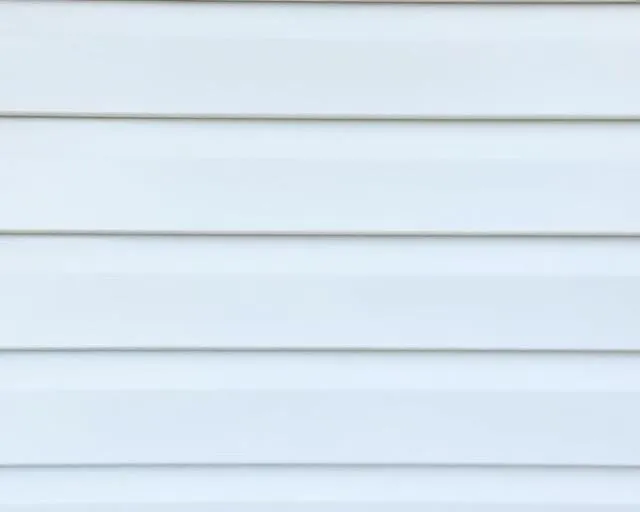

How vinyl siding installation works is easier to follow once you separate the wall prep from the panels. A crew does not start by nailing the first course. They measure the walls, decide whether the old cladding comes off, and check the surface the new panels will hang on. OKC Roofers installs vinyl and insulated vinyl across the Oklahoma City metro and starts with a free inspection, then a clear written quote. This guide walks that job in order. For what changes the price, use the vinyl siding cost guide. This page does not publish a price list.
Call (405) 796-8858 or request a free inspection.
What the crew checks before any panel goes up
A useful install starts with the walls you have, not a catalog photo. On the siding service page, vinyl and insulated vinyl are listed as an affordable, low-maintenance choice. The insulated option adds a thermal layer. That product choice has to be written down before the crew orders material, because the two panels are not the same package.
House square footage is a weak stand-in for wall area. A one-story ranch and a two-story home with the same floor plan do not have the same surface. Gables, bay windows, and extra outside corners add cuts. The Vinyl Siding Institute tells installers to break walls into rectangles and triangles, measure height and width, and add waste for roof pitch and the shape of the house. Windows and doors are often left in the count so the order has room for cuts. Very large openings, such as a garage door, can be deducted. Every 100 square feet is one square for ordering. If you want the piece-count math, read how many pieces of siding are in a square. The point here is simpler. The crew measures walls, not the listing sheet.
OKC Roofers serves homeowners in Oklahoma City, Edmond, Norman, Moore, Yukon, and Mustang. A city page means the team works there. It is not proof of a staffed office on that street. The public site lists an Oklahoma City office. Edmond is a service area. If you want the visit on the calendar, use the contact form. The phone number is (405) 796-8858. An active leak is a separate path from a planned siding job.
Tear-off, sheathing, and the water barrier
Install over existing siding and a full strip are different jobs. A full strip means the old cladding comes off so the crew can see the wall. Hidden soft spots, missing sheathing, and a worn weather barrier only show up then. Those repairs belong in the written scope before anyone treats the first bid and the second bid as the same work.
The Vinyl Siding Institute installation guide says vinyl siding should go over sheathing that gives a smooth, flat surface, and that it must never be applied directly to studs. Common wood sheathing includes plywood and oriented strand board. Foam plastic sheathing does not hold a fastener the way wood does, so nail length has to account for that. The same guide says vinyl should go over a continuous water-resistive barrier to stop incidental water, and that local code controls what your address requires. Those are method rules, not a price.
If the old panels have to come off, the removal steps live in a separate guide: how to remove vinyl siding. This article does not repeat the tool list. What matters for the install is what the open wall shows, and who approves a repair before the new panels lock on.
A smooth wall is not a slogan. High spots, loose nails, and old fixture blocks keep a new panel from sitting flat. The crew has to deal with those before the starter goes on. Hose bibs, light mounts, and dryer vents all get worked into the new layer so the panel is not cut around them after the fact. Each of those cuts is another place water can get in if the flashing is skipped. On a two-story wall, the same work happens from scaffolding or a lift. That is labor. It is why a tall elevation is a different job from a one-story side yard even when the panel is the same product.
Wood sheathing can hold a fastener. Foam sheathing cannot be counted the same way. If the existing wall has a foam layer, the fastener has to be long enough to reach solid wood beyond it. The Vinyl Siding Institute states that point so installers do not treat every wall as identical. Your quote should say what the crew found, not assume plywood is under every elevation. If a section of sheathing is soft, replacing that piece is part of making the new siding stay on. Leaving it and covering it only hides the problem until the next storm.
Storm damage is a different starting point. Hail can crack vinyl, and wind can lift edges. If that is why the wall is open, start with storm damage siding repair in Oklahoma City. Photos and a written inspection can support a claim file. They do not approve the claim or set the check amount.
How vinyl siding installation works at the wall
Once the wall is flat and the water barrier is continuous, the crew works openings and corners before the field of the wall. The Vinyl Siding Institute says code-compliant flashing should tie into the water-resistive barrier around windows, doors, and other openings. Flashing also belongs at inside and outside corners and where a wall meets a roof, so water does not get behind the cladding. Ask the estimator to name those pieces. A bid that stops at “vinyl panels” can leave corners, starter strip, and J-channel as a later add-on.
Starter strip runs along the base. J-channel frames windows and doors. Outside corners cover the cuts where two walls meet. Soffit and fascia are sometimes a separate line. If one estimate includes them and another stops at the wall panels, you are not comparing the same job. The vinyl siding cost guide is the place to line those items up. This section only explains why they exist.
Fasteners are part of the method, not a decoration. The installation manual gives fastener guidance so the panel can move. Vinyl expands and contracts with heat and cold. Oklahoma sees both. A panel locked tight at every slot can buckle when the wall heats up. A panel hung loose can rattle in the wind. The crew follows the product instructions and the local code for slot placement, not a guess from a photo online.
Courses go on from the bottom toward the top. Each panel locks into the course below it. Then the fastener sits in the slot, not through the face of the panel. Face-nailing a standard panel pins it so it cannot move. That is a common reason a wall waves after the first hot week. Around windows, the crew cuts the panel to fit the J-channel and leaves a gap so the cut edge is not jammed tight. The same idea applies at inside corners and at the last course under a soffit. A tight cut looks neat on day one and buckles later.
Gables need a different cut. The panel ends follow the roof slope, and those angled pieces are where a lot of the waste comes from. A simple rectangle of wall uses fewer of them. A front with several roof lines uses more. That is another reason two homes with the same floor area are not the same install. The crew also has to keep the courses level as they go around the house. A course that drifts on the side wall shows up at the corner, where the next wall has to meet it.
Accessories are not optional trim you add if the budget allows. Starter strip sets the first lock. If that piece is out of level, every course above it follows the error. Outside corners hide the cut ends and give the wall a finished edge. J-channel gives the cut at a window a place to sit. Leave any of those out and the panel edge is open to wind-driven rain. The siding page already lists material choice, home size and layout, permit fees, disposal, and local labor as the drivers of a quote. The install is where those drivers become tasks. Layout is the cuts. Disposal is the tear-off. Labor is the stories, the scaffolding, and the time at each opening.
Insulated vinyl adds a thermal layer. The siding page describes that layer as help with temperature swings. It does not say the panel lowers a bill by a set amount, and this article will not invent one. If you want insulated vinyl, it should be its own line on the quote so you can see it next to a standard panel.
| Install step | What the crew is doing | What to confirm in writing |
|---|---|---|
| Measure | The crew records wall height, width, gables, and openings, and adds waste for cuts. | Confirm that the order is based on measured walls, not floor area alone. |
| Open the wall | The crew either leaves the old cladding in place or strips it and hauls it away. | Confirm which of those two jobs the quote describes. |
| Prep the surface | The crew needs flat sheathing, a water-resistive barrier, and flashing at openings. | Confirm who approves sheathing or barrier repairs after tear-off. |
| Hang the panels | The crew sets starter, corners, and J-channel, then hangs courses that can move. | Confirm whether soffit and fascia are included, and which product is specified. |
What to ask before you approve the scope
You do not need to run the install yourself to judge the plan. Walk the scope in the same order the crew will. A written quote from the free inspection should name the product, the tear-off choice, and the trim. If a company will not break those out, you do not yet have a match for another bid.
- Ask whether the quote is standard vinyl or insulated vinyl, and get the product name.
- Ask whether the old siding stays or comes off, and where the debris goes.
- Ask who approves sheathing or weather-barrier repairs after the wall is open.
- Ask which flashing, corners, starter, and J-channel are included.
- Ask whether soffit and fascia are in this job or written as separate work.
- Ask which warranty covers the panel and which covers the crew’s labor.
Installation rules are product-specific. The Vinyl Siding Institute manual tells installers to follow the manufacturer’s instructions and the local building code. That is a method standard. OKC Roofers explains the difference between a manufacturer warranty and local labor coverage. Do not assume one warranty covers both the panel and the work. The siding page also rates vinyl hail resistance as moderate and wind performance as high. Fiber cement and metal rate higher on hail. If hail is why you are replacing the wall, ask for that comparison in writing. Vinyl is not the toughest cladding on that page.
Color is a material choice, not only a style choice. A light panel and a dark panel in the same profile can be different products, and the trim has to match. If the quote says only “vinyl, homeowner color,” you cannot tell what was ordered.
Permit needs depend on the city and the work. Oklahoma City, Edmond, Norman, and Moore do not share one process. The quote should say whether a permit is included, excluded, or not required for your address. The same is true for disposal. Compare bids only after both items are marked one way or the other.
Financing, when it is offered, is a payment option with its own term and approval. It is not a discount on the siding and not a price. Read the current financing page before you treat any monthly figure as available. The siding page is also where the free inspection offer lives: a written scope for your walls, not a national average.
Request a written siding quote, or call (405) 796-8858.
Frequently Asked Questions
How does vinyl siding installation start?
It starts with measured walls and a written choice about the old cladding. The crew confirms the product, then checks whether the job is an overlay or a full strip. Panels go on only after the sheathing is flat and the water barrier and flashing are in place.
Can vinyl siding be nailed straight to the studs?
No. The Vinyl Siding Institute says vinyl siding must never be applied directly to studs. It needs sheathing that provides a smooth, flat surface, and it should go over a continuous water-resistive barrier. Local building code still controls the details at your address.
Does OKC Roofers publish a price to install vinyl siding?
No. The company does not post a vinyl tariff. You get a free inspection and a written quote for your house. The vinyl siding cost guide explains which line items move that quote. It is not a promise of what this job will cost.
Is insulated vinyl installed the same way as standard vinyl?
The wall prep is the same idea: flat sheathing, a water barrier, flashing, and room for the panel to move. Insulated vinyl is still a different product because of the thermal layer. Ask for it as its own line if you want to compare it with a basic panel.
Will a vinyl siding quote include permits and disposal?
Only if the written scope says so. Permit needs depend on the city and the work. Disposal of old materials is a separate line. Compare bids only after both items are marked included, excluded, or not required.