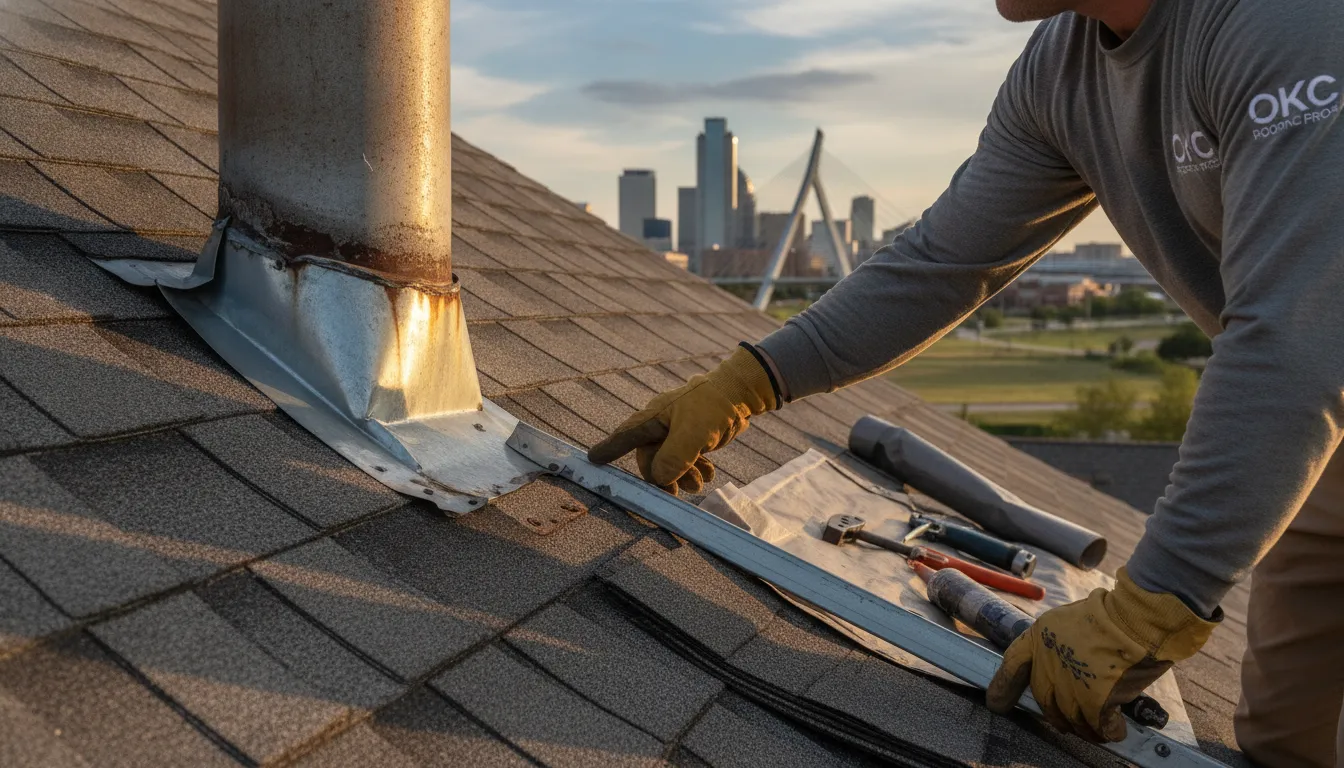

When a roof leaks, the stain on your ceiling may not sit directly below the damaged area. Water can move along the roof deck, rafters, or insulation before showing up inside, which makes flashing leaks tricky to pinpoint. The source may be around a chimney, skylight, vent, roof valley, or wall joint. Rather than covering a stain or adding caulk to a visible gap, it’s worth finding out why water is getting in. This guide to roof flashing repair Oklahoma City homeowners may need explains how professionals inspect these vulnerable transitions, when a small repair may be enough, and when damaged flashing or nearby roofing materials need replacement.
Key Takeaways
- Flashing seals vulnerable roof transitions: Properly fitted flashing directs water away from chimneys, vents, skylights, walls, valleys, and roof edges.
- Act on leak clues early: Recurring stains, dampness, rust, gaps, or lifted flashing call for a professional inspection. Photograph what you can see safely, and don’t climb onto the roof.
- Get repair details in writing: Confirm the estimate covers the flashing, nearby materials, possible hidden damage, and warranty terms. After a storm, keep photos and ask about inspection documentation and insurance-claim assistance.
What Does Roof Flashing Protect in Oklahoma City?
Roof flashing protects the joints and transitions where rain could slip beneath roofing materials. In Oklahoma City, hail, strong winds, heavy rain, and seasonal temperature changes can put these areas under strain. Even a small gap around a chimney or vent can let water reach the roof deck, insulation, or interior.
How flashing keeps water out at roof joints, edges, and openings
Flashing is installed where a roof meets a wall, chimney, vent, skylight, or another surface. These transitions interrupt the roof’s usual path for shedding water, so flashing helps direct runoff back onto the roof surface and away from the opening. At the edges, drip edge flashing guides water toward the gutters instead of letting it soak into the roof deck or fascia.
Flashing works alongside shingles, underlayment, and sealants. If it is loose, corroded, or poorly fitted, water may get through even when nearby shingles appear undamaged. During a roof repair inspection, a roofer can check these vulnerable areas and look for signs of moisture around them.
Common flashing types: step, counter, valley, pipe boot, skylight, and drip edge
Each roof transition may need a different type of flashing. Step flashing protects the joint between a sloped roof and a wall. Counter flashing covers the top edge of flashing at masonry features, such as chimneys. Valley flashing directs water where two roof slopes meet. A pipe boot seals around a plumbing vent, while skylight flashing helps keep water from entering around a skylight frame.
At the roof edge, drip edge flashing directs runoff away from the roof deck and toward the gutter. The right design and placement depend on the roof’s materials and layout. These common types of roof flashing serve distinct purposes, so a repair needs to address the specific area and how it connects to the rest of the roof.
How hail, wind-driven rain, ice, UV exposure, and temperature swings wear flashing
Oklahoma weather can put flashing under repeated stress. Hail may dent metal or damage shingles around it, while strong winds can lift flashing or loosen fasteners. Wind-driven rain can then enter through small gaps near chimneys, walls, and roof openings. During freezing weather, water that collects around a seam may freeze and put pressure on the surrounding materials.
Sun exposure can wear down sealants over time, and seasonal temperature changes cause roofing materials to expand and contract. That movement can gradually loosen a connection or reveal a gap. After severe weather, look for signs of damage from the ground and arrange an inspection if you suspect a problem. OKC Roofers provides storm-damage inspections and insurance-claim assistance.
How flashing needs differ for homes, commercial roofs, and low-slope systems
On homes, flashing commonly protects chimneys, dormers, skylights, plumbing vents, and roof-to-wall joints. The roof’s slope and shingle layout affect how water moves around each transition. Commercial buildings may have larger roof areas and more penetrations, including HVAC equipment, that require carefully fitted flashing.
Low-slope roofs need particular attention because water drains more slowly than it does on steep roofs. Flashing around parapet walls, drains, vents, and equipment curbs must work with the roof membrane to keep water out. Sun exposure and standing water can wear roofing materials and sealants, so the right repair depends on the type and condition of the full roofing system. A roofer should assess flashing along with the surrounding surface, rather than treating a visible gap as an isolated problem.
Where Do Flashing Leaks Start, and How Can You Repair Them?
Check chimneys, skylights, vents, valleys, walls, and roof edges
Flashing seals the places where roofing meets a wall, chimney, vent, skylight, or roof edge. Valleys also need careful attention because water flows through them during rain. Check for gaps, lifted edges, loose pieces, or sealant that has cracked or pulled away. These roof intersections are common leak points, according to roofing contractors.
A leak may show up inside your home some distance from the damaged flashing. Note ceiling stains, damp spots, or musty odors, but don’t climb onto a wet or steep roof to investigate. A roofer can inspect the area safely and check whether nearby shingles or other materials have been affected. If you notice active leaking, move belongings away from the water and contact a professional.
Reseal or refasten flashing when damage is minor
If flashing is in good condition but has a small gap or a loose fastener, a roofer may be able to reseal or refasten it. The repair should match the flashing material and roof system. Before applying sealant, the roofer should remove failed caulk and debris so the new material can adhere properly.
Simply adding caulk over a damaged area may cover the problem without stopping water from entering. Small cracks can also widen over time, so arrange an inspection rather than waiting for another storm. A professional can decide whether a localized repair is suitable or if the flashing needs replacement. Learn more about OKC Roofers’ roof repair services.
Replace flashing with rust, cracks, bends, or poor installation
Flashing that is badly rusted, cracked, bent, or installed incorrectly may no longer form a reliable seal. A roofer may need to remove the damaged piece and install new flashing that fits the roof and the surface it meets. This work can involve lifting nearby shingles or siding, so correct placement is important. Poorly fitted flashing can leave openings for water to enter.
Ask the roofer to explain why replacement is needed and whether nearby roofing materials also require attention. A roof flashing repair guide notes that severe corrosion, cracks, and installation problems often call for replacement. Request a written estimate that describes the work and materials, especially if the repair involves more than the flashing itself.
Check shingles, underlayment, and decking for water damage
A flashing repair should include an inspection of the roofing materials around and beneath the leak. Water can travel along rafters, soak insulation, or reach the roof decking before a stain appears indoors. Depending on the location, a roofer may need to lift shingles to check the underlayment and decking for dampness, soft spots, discoloration, or decay.
If those materials are damaged, sealing the flashing alone may not solve the problem. Ask the contractor to explain what they found and list any additional work in the estimate. Water can follow hidden paths after flashing fails, as Brazil’s Roofing describes. Addressing hidden damage can help prevent recurring leaks and more extensive repairs.
Document suspected storm damage and ask about insurance-claim assistance
After hail or strong winds, take photos of visible damage from the ground and write down when the storm occurred. If you notice indoor stains or damp areas, photograph those as well. Don’t climb onto the roof or move damaged materials. Contact your insurer to ask about its claim process, then schedule a professional inspection to document the roof’s condition and identify needed repairs.
Keep copies of photos, inspection notes, estimates, and insurer correspondence. Oklahoma storms can bring hail and high winds, so a clear record can help when discussing the damage and repair scope. OKC Roofers offers storm-damage assistance and can help property owners understand repair needs and insurance-claim support.
What Signs Show That Roof Flashing Needs Repair?
Roof flashing seals the vulnerable places where a roof meets a chimney, skylight, vent, wall, or valley. When flashing cracks, corrodes, or pulls loose, water can slip beneath the shingles and enter the roof system. The first warning may appear inside your home, even when the damaged flashing is somewhere else.
After heavy rain, hail, or strong winds in Oklahoma City, look for changes on ceilings, upper walls, and in accessible attic spaces. From the ground, you may also be able to spot visibly bent or lifted flashing. Don’t climb onto the roof to check it. Wet or storm-damaged roofing can be unsafe to walk on, and loose materials may shift underfoot.
A single stain doesn’t prove that flashing has failed, but recurring moisture or visible damage deserves attention. Make a note of when the signs appear and take photos from a safe location. A roofing professional can trace the leak, inspect the flashing and surrounding materials, and recommend a repair. The National Roofing Contractors Association’s homeowner guidance recommends regular roof inspections to help identify concerns early. OKC Roofers offers free 18-point inspections and roof repair services for local property owners.
Look for ceiling stains, damp spots, peeling paint, or musty odors
Brown or yellow ceiling stains, damp patches, peeling paint, and musty smells can signal that water is getting into your home. Check rooms below chimneys, skylights, plumbing vents, and roof-to-wall joints. If a mark grows after rain or reappears after drying, note when it happens and where it’s located. Those details can help a roofer narrow down the source.
Moisture may also leave clues in an accessible attic, such as damp insulation, darkened wood, or a musty odor. These signs don’t confirm that flashing is the cause, but they warrant an inspection. A roof flashing repair guide describes interior stains and dampness as possible signs of water entering around roof joints and openings.
Check for cracked sealant, rust, corrosion, loose fasteners, gaps, or lifted edges
From the ground, look for flashing that appears bent, separated, or lifted around roof openings and edges. If you can see the area safely from a window, watch for cracked sealant, rust, loose fasteners, or gaps. Corroded metal or flashing that has pulled away from the roof may no longer direct water away from the joint.
Deteriorated sealant doesn’t always mean that adding more caulk will fix the problem. The flashing may need to be refastened or replaced, and the materials beneath it may also need attention. Don’t touch loose or damaged sections. Common signs of flashing damage include corrosion, gaps, failing sealant, and detached pieces.
Watch for recurring leaks near roof openings, walls, or valleys
A leak that returns after each storm may point to a flashing problem, even if the roof looks fine from inside. Look for moisture near chimneys, skylights, plumbing vents, roof-to-wall joints, and valleys where two roof sections meet. These areas rely on properly fitted flashing to guide water down the roof rather than beneath the shingles.
Note when the leak occurs. Wind-driven rain may reveal a gap that stays unnoticed during lighter showers, while prolonged rain can expose another weak point. Recurring moisture deserves a full inspection, not just a patch over the visible stain. A roofer can assess the flashing and nearby roofing materials to find where water is entering. This overview of common flashing repairs explains why roof joints are frequent sources of leaks.
Understand why leak stains may appear far from the flashing failure
The spot where water appears indoors may not be directly below the damaged flashing. After passing beneath the roof covering, water can travel along the roof deck, rafters, insulation, or framing before it reaches a ceiling or wall. A stain in a bedroom, for example, could come from a roof joint several feet away.
That’s why treating only the visible mark may not stop the leak. A roofer needs to trace the moisture path and inspect nearby roof details, including flashing and the materials beneath it. If you notice a stain, take a photo and note its size and when it appeared. Sharing those details can help with the inspection. This flashing repair guide also explains why an interior leak mark may appear away from the point where water entered.
Stay off the roof and schedule an inspection after suspected damage
Don’t climb onto the roof to check suspected flashing damage. Shingles can be slippery when wet, and hail or wind may weaken roofing materials without leaving obvious signs from the ground. Instead, photograph interior stains and any damage you can see safely. If water is actively entering, move belongings away from the leak and use a container to catch drips while you arrange help.
Contact a roofer promptly after a storm or if a leak keeps returning. A professional can inspect the flashing, shingles, and surrounding areas for signs of water damage. OKC Roofers offers free 18-point inspections and guarantees two-hour on-site inspections for emergency calls. If hail or wind may have affected your roof, learn about the company’s storm-damage services.
How Do Roofers Repair Flashing?
Trace the leak and inspect the flashing and surrounding roof
A roofer looks for the source of the leak, not just the ceiling stain it caused. Water can travel along the roof deck, framing, or insulation before it becomes visible indoors, so the stain may be several feet from the failed flashing. The inspection may cover chimneys, skylights, vents, roof valleys, wall joints, and the shingles or roofing materials around them.
In Oklahoma City, wind-driven rain and hail can affect several parts of a roof at once. A roofer may check for lifted shingles, impact marks, and other signs of storm damage as well as flashing problems. This leak-tracing approach helps identify the cause before repairs begin. Stay off the roof and let a professional inspect it safely.
Match repair methods and materials to the roof and flashing type
The right repair depends on where the flashing sits, what it’s made of, and how it connects to the roof. A roofer may inspect step flashing along a wall, a pipe boot around a vent, or metal flashing around a chimney or skylight. They’ll also consider nearby shingles, roofing membrane, and siding to make sure the repair works with the surrounding materials.
Roof design matters, too. A steep-slope shingle roof and a low-slope commercial roof can require different materials and installation details. Local conditions, including heavy rain, ice, and strong winds, can also affect how flashing performs. Ask the roofer to explain why the chosen repair suits your roof. A thorough flashing inspection considers more than the visible gap.
Reseal, refasten, or replace damaged flashing
If the flashing is in good condition and the issue is limited to a loose fastener or worn sealant, a roofer may be able to refasten or reseal it. This can work when the metal remains intact and sits in the correct position. Applying sealant alone may not solve the problem if the flashing has shifted or was installed incorrectly.
Rust, cracks, bends, or poor installation may call for replacement. The roofer may need to lift or remove nearby shingles to fit new flashing and connect it properly to the roof’s water-shedding layers. The repair should address the cause of the leak, not simply cover it with a surface patch. The right scope depends on the damage and roof type. Learn more about OKC Roofers’ roof repair services.
Check for hidden damage, not just visible gaps
A gap around flashing may point to damage beneath the roof surface. If water has been entering for some time, a roofer may check the underlayment, decking, insulation, and nearby framing for moisture or deterioration. Shingles or other roofing materials around the flashing may also need repair so water can drain away as intended.
Old caulk can hide a problem without fixing it. Sun exposure and temperature changes can cause sealant to dry, shrink, or crack, allowing water to get in again. The roofer should check how the flashing connects to surrounding materials and explain whether any additional repairs are needed. If you suspect storm damage, take photos from the ground and note any indoor leaks or stains. OKC Roofers provides storm-damage assistance to help homeowners understand their options.
Ask what the estimate includes and how the roofer will check the work
Ask for a written estimate that identifies the affected flashing, the planned repair, and any related work. Check whether the price includes removing and reinstalling shingles, replacing underlayment, or repairing decking if the roofer finds hidden damage. A clear scope helps you understand what the crew plans to do and what might change if they uncover additional problems.
Ask how the roofer will check the finished repair, too. They should explain how they’ll confirm the flashing fits correctly and connects to nearby roofing materials. Find out whether cleanup is included and what warranty applies to the work. If wind or hail may have caused the damage, ask what the roofer can document for an insurance claim. A detailed estimate gives you a clear basis for comparing proposals before work begins.
How Much Does Roof Flashing Repair Cost in Oklahoma City?
Expect minor repairs to cost around $250–$600 and larger repairs around $600–$1,500
As a rough planning range, minor roof flashing repairs may cost about $250 to $600. Larger repairs, such as replacing flashing and nearby shingles, may run around $600 to $1,500. These are estimates, not guaranteed prices for every Oklahoma City home. The final cost depends on the location and extent of the damage, the materials involved, and whether the roofer finds problems beneath the roof surface.
For comparison, HomeGuide’s roof repair cost guide puts repairs around skylights, chimneys, and vents at roughly $200 to $500 on average, with full flashing replacement often costing more. Ask whether your estimate covers resealing, a full flashing replacement, and any surrounding shingles or underlayment. Clarifying the scope helps you compare quotes on equal terms.
See how roof access, materials, labor, and hidden damage affect the estimate
The repair location can affect labor costs. Flashing on a steep roof, around a tall chimney, or in a hard-to-reach area may take more time and require additional safety measures. The material and roof type matter, too: the repair needs to fit the existing system and hold up to local weather.
Damage beneath the visible flashing can add to the work. Water may have affected shingles, underlayment, or roof decking, which a roofer may not be able to assess until nearby materials are lifted. Ask which items are included in the estimate and how the contractor will handle newly discovered damage. Local roof repair services can inspect the area and explain the likely scope before work begins.
Request a written estimate that separates flashing work from related repairs
Ask for a written estimate that identifies the repair location and explains whether the roofer plans to reseal, refasten, or replace the flashing. It should also state whether nearby shingles, underlayment, or other materials are included. If the crew finds hidden damage, ask how it will be documented and whether you’ll approve additional work before it starts.
A clear estimate makes it easier to compare proposals and understand what you’re paying for. Check that it covers cleanup, the payment schedule, and warranty terms, too. If quotes differ, compare the work included rather than focusing only on the total. One contractor may include replacement of surrounding materials, while another may only cover the flashing. Review the contractor’s roofing services and ask questions before scheduling.
Ask how storm damage could affect the repair scope or insurance claim
Hail and wind can damage flashing, shingles, and other roof components at the same time. If you suspect storm damage, take photos from the ground and note when you first noticed the problem. Don’t climb onto the roof to check it yourself. Ask the roofer to document the damage and explain whether the estimate covers only flashing or other storm-related repairs as well.
Coverage depends on your policy, the cause of damage, and your insurer’s review, so don’t assume the work will be covered. Contact your insurance company to ask what documentation it needs. A roofer can explain inspection findings and provide repair details, but the insurer determines coverage. Learn more about OKC Roofers’ storm damage services and insurance-claim assistance.
Check for contractor financing and current discounts
If a flashing problem is part of a larger roof project, ask whether the contractor offers financing and what terms apply. Review any fees, payment schedule, and credit requirements, and get the details in writing. Financing can make a larger repair or replacement easier to plan for, but compare the total cost with other payment options before making a decision.
You can also ask whether any discounts apply to your project. Confirm eligibility, deadlines, and whether an offer can be combined with financing. Don’t choose a contractor based on a discount alone: check that the estimate clearly describes the work, materials, and warranty. If the inspection finds broader roof damage, ask for a separate explanation of that work and its cost. OKC Roofers shares details about its roof replacement services and financing options.
How Do You Choose a Roof Flashing Repair Service in Oklahoma City?
A flashing leak can be difficult to trace, and the ceiling stain may appear far from the roof damage. Choose a roofer who will inspect the roof and nearby materials, explain the repair options, and provide a written estimate. These questions can help you compare contractors and find a service that fits your roof and your needs.
Check local experience, credentials, reviews, and written warranty terms
Oklahoma roofs face hail, strong winds, heavy rain, and sharp temperature changes. Look for a contractor who understands local weather and the roof types common in Oklahoma City and nearby communities. Ask for proof of insurance and check recent customer reviews for details about communication, workmanship, cleanup, and follow-through.
Before work begins, request a written estimate that describes the problem, proposed repairs, materials, and any related work. Get warranty terms in writing, too, so you know who to contact if the leak returns. OKC Roofers has served local homeowners since 2016 and has more than 700 reviews with a 4.9-star rating. Read about the company’s local experience and approach as you compare contractors.
Ask how the roofer will find the leak and explain repair or replacement
Ask how the roofer will trace the leak and inspect the flashing, shingles, underlayment, and roof deck nearby. They should explain what they find and whether the flashing can be resealed or refastened, or needs replacement. The right fix depends on the flashing’s condition, how it was installed, and whether water has damaged surrounding materials.
Be cautious if a contractor recommends extensive work without showing you the problem or explaining the scope. Poor flashing or installation shortcuts can cause leaks and premature roof damage, as this guide to roofing in Oklahoma weather explains. Ask for photos of the affected area, especially if you can’t safely see the roof yourself.
Confirm what the flashing warranty covers
Ask whether the warranty covers the flashing material, the installation, or both. A manufacturer’s warranty may cover product defects, while a contractor’s workmanship warranty may address installation problems. Find out how long each warranty lasts, what could void it, and how to request service if the repaired area leaks again.
Check whether the warranty applies only to the flashing or also covers related work, such as shingles or underlayment disturbed during the repair. Flashing materials vary in lifespan and weather resistance, so ask why the roofer recommends a particular option for your roof. This overview of roof flashing materials offers useful background, but your contractor should explain how the proposed materials suit your roof and local conditions.
Ask about emergency inspections after severe weather
Hail and high winds can loosen flashing or damage a roof in ways that aren’t easy to spot from the ground. Ask how quickly the contractor can respond to urgent leak calls and what they’ll do to protect your home if they find an opening. If water is entering your home, move belongings away from the leak and call a roofer. Don’t climb onto the roof.
Ask whether the contractor documents storm damage with photos and provides a written inspection summary. Keep your own notes and photos of any interior damage, and contact your insurer to ask about your policy and reporting requirements. Since severe weather can affect roofs across Oklahoma City and surrounding communities, knowing a contractor’s emergency response process can help you act quickly when damage occurs.
Consider OKC Roofers’ free 18-point inspections, guaranteed two-hour emergency on-site inspections, and financing options
When comparing contractors, consider what an inspection covers, how quickly the team can respond, and which payment options are available. OKC Roofers offers free 18-point inspections and guarantees an emergency on-site inspection within two hours. The company also offers financing options. Ask about eligibility, repayment terms, and any fees so you can decide whether financing suits your budget.
A thorough inspection can identify flashing problems as well as damage to nearby shingles, vents, or other roof components. Review OKC Roofers’ roof repair services and ask which work is necessary, what it will cost, and whether the estimate separates flashing repairs from other items. If a storm caused the damage, ask about storm-damage assistance and what inspection records or photos the team can provide.
Contact OKC Roofers for roof repair, storm-damage assistance, or an inspection
If you’ve noticed a ceiling stain, recurring leak, or damaged flashing, arrange an inspection before the problem spreads. Tell the roofer when you first noticed the issue, whether it appeared after a storm, and which rooms or roof areas seem affected. These details can help the team focus its inspection and explain the next steps.
OKC Roofers serves homeowners in Oklahoma City and nearby communities, including Edmond, Norman, Moore, Yukon, and Mustang. Contact the team to ask about a free 18-point inspection, emergency response, repair options, or storm-related damage. Before approving work, request a written estimate and warranty details so you understand what the repair includes.
Frequently Asked Questions
How can I tell if a roof leak is coming from damaged flashing?
Recurring leaks near a chimney, skylight, vent, wall, or roof valley may point to flashing trouble. Ceiling stains and musty odors are also clues, though water can travel before it shows indoors. A roofer can trace the leak and check the surrounding roof materials.
Can I repair roof flashing myself?
It’s safer to leave roof work to a professional. Roofs can be slippery or weakened after storms, and a surface patch may not fix the cause of the leak. A roofer can determine whether the flashing needs resealing, refastening, or replacement.
Does damaged flashing always need to be replaced?
No. If the flashing is intact and correctly positioned, a roofer may be able to refasten or reseal it. Rust, cracks, bends, or poor installation may require replacement. The roofer should also check nearby shingles and materials for moisture damage.
Will homeowners insurance cover roof flashing repair?
Coverage depends on your policy and what caused the damage. Contact your insurer to ask about your claim requirements, and keep photos, inspection notes, and estimates. A roofing contractor can document what they find, but your insurer decides whether the work is covered.
How much does roof flashing repair cost in Oklahoma City?
The cost depends on the repair location, roof access, materials, and whether water damaged the roof deck or nearby shingles. Request a written estimate that separates flashing work from related repairs, so you can see what the price includes.