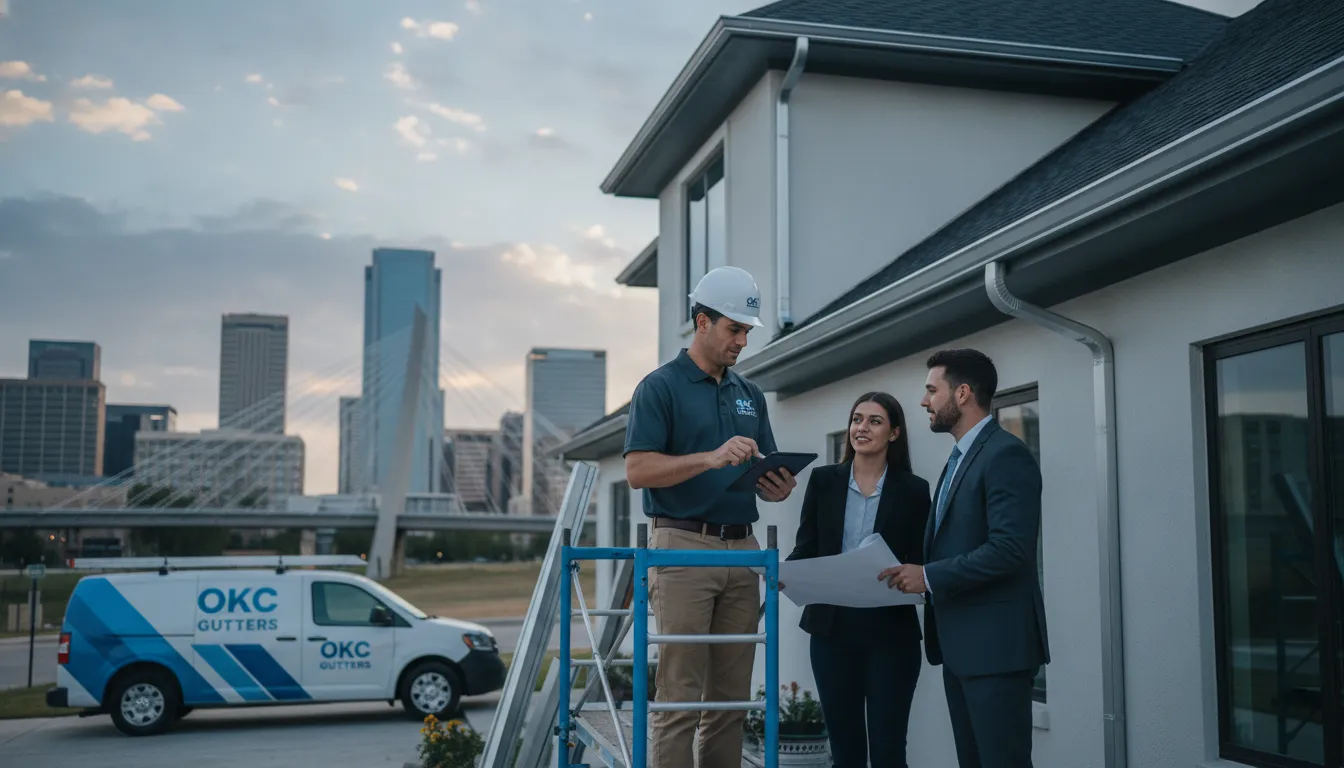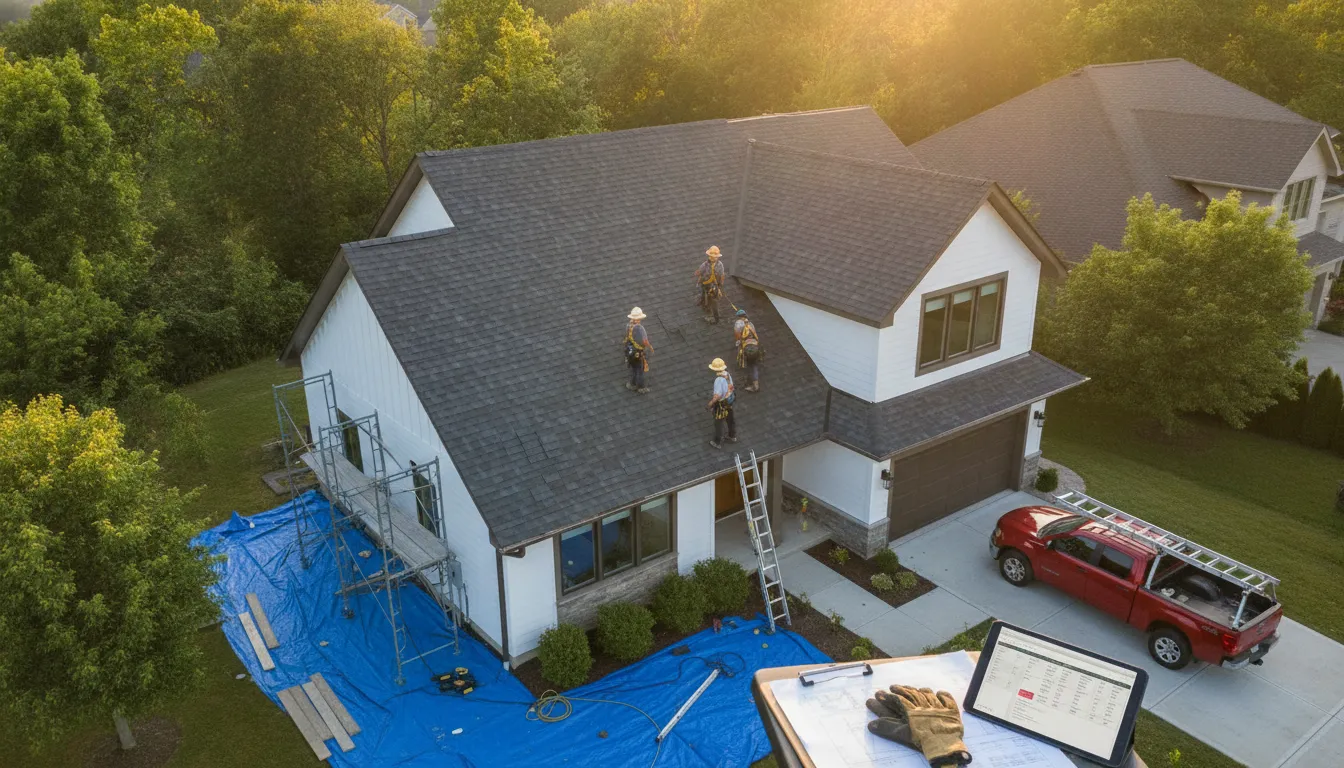

Storm damage does not always announce itself with a large hole or a missing section of shingles. Hail can bruise roofing materials, while strong wind may loosen edges, ridge caps, and flashing. Water can then enter the roof system and cause damage that appears later inside the home. After a severe Oklahoma storm, property owners often need to decide between roof repair or replacement without much time to spare. This guide will help you recognize common warning signs, understand how contractors assess damage, and prepare for an insurance claim. OKC Roofers can provide a free 18-point inspection and emergency on-site response for urgent roofing concerns.
Key Takeaways
- Match the solution to the damage: Minor, isolated issues may need a repair, while repeated leaks, widespread shingle wear, or weakened decking often point to replacement.
- Schedule an inspection before deciding: A professional can check the roof, attic, flashing, ventilation, and storm damage to identify problems that are not visible from the ground.
- Compare the full cost and value: Review itemized estimates, expected lifespan, warranties, insurance coverage, financing terms, cleanup, and potential future repairs before choosing a contractor.
Roof Repair or Replacement: What’s the Difference?
Roof repair and roof replacement address different levels of damage. A repair corrects a specific problem, such as a leaking pipe collar or a few missing shingles. Replacement involves removing the existing roofing materials and installing a new roofing system across most or all of the roof.
The right choice depends on more than the visible damage. Your roof’s age, material, maintenance history, decking, flashing, ventilation, and exposure to Oklahoma weather all matter. A small leak on a newer, well-maintained roof may need only a targeted repair. A roof with widespread deterioration or recurring leaks may be a better candidate for replacement.
A professional inspection can help you avoid paying for work your roof does not need while identifying problems that could worsen. OKC Roofers’ roofing services include inspections, repairs, replacements, and storm damage assistance for homeowners in Oklahoma City and surrounding communities.
What roof repair fixes
Roof repair is typically appropriate when the damage is limited and the rest of the roofing system remains in good condition. Common repair issues include a few wind-damaged shingles, failed flashing around chimneys or vents, small isolated leaks, and localized storm damage. Depending on the problem, a contractor may replace individual shingles, reseal flashing, repair a vent boot, or replace a small section of damaged decking.
The goal is to correct the source of the problem, not just cover the visible symptom. For example, a ceiling stain may come from damaged flashing several feet away from where water appears inside the home. A thorough roof repair inspection can help locate the entry point and determine whether moisture has spread beneath the shingles.
Repairs work best on newer roofs with sound shingles, secure flashing, and no signs of widespread deterioration. If matching materials are available, a targeted repair can restore protection while preserving the remaining service life of the roof.
What roof replacement changes
Roof replacement involves removing the existing roofing materials and installing new components across the roof. Depending on the project, this may include new underlayment, flashing, ventilation, shingles, metal panels, and other materials. The contractor can also inspect the roof deck during installation and replace areas weakened by moisture or rot.
Replacement may make more sense when the roof is near or beyond its expected service life, shingles are widely curled, cracked, brittle, or missing granules, or leaks occur in several locations. Repeated repairs can indicate that the roofing materials are deteriorating across the entire surface instead of failing in one isolated area.
A full roof replacement creates a more consistent roofing system than a series of piecemeal repairs. It can address aging components, improve water shedding, and provide new material and workmanship coverage, depending on the contractor and products selected. Ask for written details about decking, ventilation, flashing, cleanup, and guarantee terms before approving the work.
How repair and replacement affect cost, lifespan, and disruption
A typical roof repair may cost a few hundred to a couple thousand dollars, depending on the damage, materials, labor, roof access, and urgency. Asphalt shingle repairs are generally less expensive than repairs involving metal, slate, or other specialized materials. A full replacement is usually a five-figure project for many homes, with the final price influenced by roof size, pitch, tear-off requirements, decking damage, material choice, and installation complexity.
Repair usually creates less noise, debris, and disruption. It can also extend the roof’s useful life when the underlying system is still strong. The limitation is that a repair addresses known damage only. If the roof is aging or has several weak areas, additional repairs may become necessary over time.
Replacement costs more upfront and may take longer, but it renews the roofing system and can provide more predictable protection for many years. Oklahoma City homeowners should consider exposure to wind, hail, and severe storms when comparing immediate savings with long-term reliability. A written inspection report and itemized estimate can make it easier to compare both options before work begins.
How Can You Tell If Your Roof Needs Repair or Replacement?
Roof problems are not always easy to spot from the ground. A few missing shingles may need a straightforward repair, while widespread granule loss, repeated leaks, or soft decking may indicate that the roof is nearing the end of its useful life. Oklahoma City weather can make the assessment more difficult because high winds, hail, heavy rain, and temperature changes can damage different parts of a roofing system.
Start with a visual check from the ground and, if it is safe, a brief look inside the attic. Avoid climbing onto the roof to investigate damage. Wet, steep, or unstable roofing surfaces can cause serious injuries, and walking across damaged shingles can make the problem worse.
A professional inspection can provide a clearer answer. A roofer should examine the shingles, flashing, ventilation, underlayment, decking, and visible structure before recommending a repair or replacement. OKC Roofers offers free 18-point roof inspections to help homeowners understand the condition of their roof and choose the appropriate next step.
Pay attention to the following warning signs as you decide whether to schedule an inspection.
Check your roof’s age, material, and service life
Your roof’s age offers useful context, but it should not determine the decision by itself. Asphalt shingle roofs often last about 15 to 30 years, depending on the shingle quality, installation, ventilation, weather exposure, and maintenance. Metal roofing may last considerably longer when it is installed and maintained correctly.
Find out when the roof was installed and which material it uses. Also check whether it has already received major repairs. A roof that is more than 15 years old and needs repairs every year may be nearing the end of its practical service life. However, an older roof with little wear may still have useful years remaining, while a newer roof can require repairs after severe hail or wind damage.
Ask a roofing contractor to assess the roof’s remaining service life instead of relying on age alone. That information can help you compare another repair with the cost and long-term value of roof replacement.
Look for curled, cracked, missing, or loose shingles
Shingles that curl at the edges, crack across the surface, or appear brittle have lost some of their ability to protect the roof. Missing or loose shingles leave the roof more exposed to water, wind, and sunlight. The risk is especially concerning after strong Oklahoma winds or heavy rain.
From the ground, look for uneven patches, lifted shingle edges, or dark areas where roofing layers may be exposed. You may also find shingle pieces around downspouts or in the yard after a storm. These signs do not automatically mean the entire roof needs replacement. A small number of damaged shingles on an otherwise sound roof may be repairable.
Widespread curling, cracking, or missing shingles present a different concern. If the damage appears across several roof slopes, it may reflect broader wear rather than one isolated event. A contractor can inspect the surrounding shingles and determine whether a targeted repair is likely to hold.
Check for granule loss, bald spots, and exposed underlayment
Granules give asphalt shingles their textured surface and help protect them from ultraviolet light, heat, and moisture. Some granule loss is normal, particularly after a new roof installation, but large amounts deserve attention. Look for bald patches, unusually smooth shingle surfaces, or piles of granules in the gutters.
You should also watch for exposed underlayment or dark areas beneath missing shingle sections. Underlayment provides an additional layer of protection, but it is not designed to remain exposed for long periods. Continued exposure can lead to moisture intrusion and faster deterioration.
A few granules in the gutter may not indicate a serious problem. Widespread bald spots, heavy granule loss, or exposed roof layers may point to advanced wear or storm damage. A professional can determine whether replacing individual shingles will solve the issue or whether the roof requires a more extensive plan.
Watch for ceiling stains, wet insulation, and attic daylight
Interior warning signs can appear before exterior roof damage is easy to see. Check ceilings, walls, and areas around chimneys, vents, skylights, and exterior walls for yellow or brown stains. Bubbling paint, peeling drywall, or a musty odor can also indicate that water is entering the home.
If you can safely access the attic, look for wet insulation, dark wood, water trails, or daylight coming through the roof deck. Daylight may indicate a hole, missing roofing material, or a gap around a roof penetration. Wet insulation can hold moisture against the structure, allowing damage to continue after the rain stops.
Do not assume an old stain is harmless. It may be inactive, but it could return during the next storm. Take photos, mark the area, and arrange an inspection. Prompt attention can help limit damage to insulation, drywall, framing, and personal belongings.
Track active and recurring leaks
A single leak does not always require a new roof. Localized leaks can develop around chimney flashing, plumbing vents, skylights, valleys, or other roof penetrations. If the surrounding shingles and roof structure remain in good condition, repairing the source may provide a lasting solution.
Recurring leaks need a closer assessment. If water returns after multiple repairs, the original source may not have been identified, or nearby materials may have deteriorated. Water can travel along the underside of the roof before appearing inside, so a ceiling stain may not sit directly below the exterior problem.
Keep a record of when leaks occur, where they appear, and which repairs have been completed. Photos taken during or after rainfall can help a contractor trace the source. If water is entering near an electrical fixture, move away from the area and contact a professional promptly. OKC Roofers provides roof repair services in Oklahoma City for leaks, storm damage, and other localized problems.
Look for moss, debris, and trapped moisture
Moss, leaves, branches, and other debris can hold moisture against roofing materials. In shaded areas, moss may grow along shingle edges or between roof sections. It can lift shingles, interfere with drainage, and shorten the roof’s useful life when the underlying area stays damp.
Debris often collects around valleys, chimneys, roof-to-wall connections, and areas beneath overhanging trees. Blocked drainage paths can direct water beneath shingles or cause it to collect near flashing. After a storm, check the ground for fallen branches and roofing pieces, but do not climb onto the roof to remove debris.
Small amounts of surface debris may only require safe removal and routine maintenance. Thick moss, trapped moisture, stained decking, or repeated drainage problems need a closer inspection. Avoid pressure-washing asphalt shingles because aggressive cleaning can remove protective granules and damage the roofing surface.
Treat sagging decking and movement as urgent
A sagging section of roof can indicate damaged decking or a problem with the supporting structure. Long-term moisture exposure may soften the wood beneath the shingles. Concentrated water, poor drainage, or structural movement can also create dips and uneven areas.
From the ground, look for a roofline that appears wavy, bowed, or lower in one section than the rest. Inside the attic, soft wood, dark staining, cracked framing, or visible movement deserves prompt attention. Do not walk on a roof that feels soft, springy, or unstable because damaged decking may not support your weight.
Sagging is more than a cosmetic concern. It can allow water to collect, worsen leaks, and create safety risks. Keep people away from the affected area and arrange a professional assessment as soon as possible. If severe weather caused sudden damage, ask about an emergency inspection and temporary protection while a permanent repair plan is prepared.
Use safe ground and attic checks
You can identify many warning signs without climbing onto the roof. Use binoculars to inspect shingles, flashing, roof edges, and visible valleys from the ground. Check gutters for granules, shingle pieces, and excessive debris. After rainfall, look for overflowing gutters, water pooling near the foundation, or stains beneath the roof edges.
An attic check can reveal moisture that is not visible outside, but only enter if the space is safely accessible. Wear protective clothing, use a stable light, and step only on floor joists or installed walkways. Do not touch wet electrical components, disturb insulation unnecessarily, or crawl beneath areas that show structural damage.
Leave steep, wet, damaged, or difficult-to-access roofs to a professional. An inspection can document the roof’s condition with photos and measurements, identify hidden moisture or decking problems, and distinguish repairable damage from replacement needs. This is especially useful after hail or wind events, when storm damage restoration services can help with the repair plan and insurance documentation.
When Should You Repair Your Roof?
Roof repair is often the right choice when the damage is limited and the rest of the roofing system remains in good condition. A few missing shingles, loose flashing, or a small leak does not automatically mean you need a new roof. The decision depends on the roof’s age, the location of the damage, whether moisture has reached the decking, and how much useful life remains.
A professional inspection can help distinguish an isolated problem from widespread deterioration. The inspection should cover the shingles, flashing, underlayment, ventilation, decking, and attic. OKC Roofers offers a free 18-point roof inspection to help homeowners understand their roof’s condition before choosing between repair and replacement.
Repair typically makes sense when the roof is relatively young, damage is confined to one area, and the underlying materials remain sound. Fixing the issue promptly can help keep water from spreading into insulation, drywall, framing, and other parts of the home. Even a small leak deserves attention, particularly after severe weather in Oklahoma City. Research on how contractors decide between roof repair and replacement also emphasizes the importance of damage location, roof condition, and remaining service life.
Small, isolated damage on a sound roof
A targeted repair may be enough when only a small section of the roof is damaged. Common examples include a few missing or lifted shingles, a puncture caused by a branch, or a small leak near a roof penetration. If the surrounding shingles are flat, firmly attached, and free from widespread wear, replacing the affected materials can restore protection without disturbing the rest of the roof.
The cause matters, too. One damaged area from wind or falling debris is different from shingles failing across several slopes. Ask the contractor to show you the affected area and explain whether nearby materials remain watertight. This evidence can help you avoid paying for a full replacement when a focused roof repair can address the problem.
Newer shingles with limited wear
Newer asphalt shingles are often good candidates for repair when the damage is limited. A composition roof under about 15 years old may still have substantial service life, especially when it was installed correctly and maintained over time. The exact timeline varies according to shingle quality, ventilation, weather exposure, and installation practices.
Look for signs that the rest of the roof is holding up well. Shingles should not have widespread curling, cracking, bald spots, or heavy granule loss. If most of the roof remains uniform and only one section shows damage, replacing individual shingles or repairing a nearby penetration may be practical. A contractor should also check whether the shingles are brittle, since weathered materials can break during repair work. Roofing guidance for homeowners similarly points to roof age and overall wear when evaluating repair options.
Damaged flashing, vent boots, pipe collars, or sealant
Some roof leaks begin around components rather than in the middle of a shingle field. Flashing around chimneys, walls, skylights, and vents can loosen or deteriorate. Rubber vent boots and pipe collars may crack with age, while old sealant can shrink and pull away from the surface.
These issues are often repairable when the surrounding roof is in good shape. A roofer may replace the damaged flashing or boot, renew the sealant, and inspect the area for hidden moisture. Simply covering a leak with new caulk may provide temporary relief if water has already reached the underlayment or decking. Ask for a repair that addresses the source of the leak, not just the visible stain inside your home. Repairs involving flashing and isolated leaks are commonly considered when the roof has no broader signs of failure.
Localized wind, hail, or branch damage
Oklahoma weather can damage one part of a roof without affecting the entire system. Strong wind may lift several shingles along an edge, hail may bruise a small section, or a falling branch may puncture one slope. When the damage is clearly localized and the remaining shingles are secure, a targeted repair may restore the roof’s function.
After a storm, avoid climbing onto the roof to inspect it yourself. From the ground, look for missing shingles, exposed underlayment, displaced flashing, or debris. Then contact a professional for a closer assessment. OKC Roofers provides storm damage inspections and can document visible damage for homeowners who may need help with an insurance claim. Prompt documentation may also help prevent temporary storm damage from becoming a larger moisture problem.
Available matching shingles and materials
A repair is easier to complete neatly when matching shingles and other materials are available. Shingles can vary by color, profile, size, and manufacturer, so an older roof may be difficult to match exactly. A close match may be acceptable on a less visible slope, but noticeable differences can affect the roof’s appearance and may matter if you plan to sell your home.
Your contractor should check whether replacement shingles are still available and whether the existing roof can be repaired without damaging nearby materials. If an exact match is unavailable, ask about the practical options. You may be able to use a similar product for a small repair, save matching materials from another part of the roof, or consider replacement if the mismatch would be extensive. The roof’s age and condition should guide this decision, not appearance alone.
Repairs that extend roof life
A well-planned repair can give a sound roof more useful time. Replacing damaged shingles, securing flashing, sealing a failed pipe collar, and correcting a small ventilation issue may prevent a minor problem from becoming widespread water damage. This approach can also give you time to budget for replacement instead of making a rushed decision after a major leak.
Repairs work best when they address the cause as well as the symptom. For example, replacing wet shingles without correcting failed flashing may leave the leak active. Ask the contractor what was damaged, what work is recommended, and how long the repair should reasonably last. If the roof is generally in good condition, a targeted fix may be the most sensible way to protect your home while preserving its remaining service life.
When Should You Replace Your Roof?
Roof replacement makes sense when repairs can no longer restore dependable protection. The decision usually depends on several factors together, including the roof’s age, the extent of damage, its repair history, and the condition of the decking, flashing, and ventilation system.
A few missing shingles do not automatically mean you need a new roof. However, widespread deterioration, recurring leaks, or storm damage across multiple sections can make replacement more practical than continuing with isolated repairs. A professional inspection can help distinguish normal wear from problems affecting the entire roofing system.
Oklahoma City homeowners should also consider the impact of wind, hail, intense sunlight, and temperature changes. These conditions can shorten a roof’s service life or reveal damage that is difficult to spot from the ground. If you suspect your roof is nearing failure, schedule a roof replacement evaluation before a small problem causes interior or structural damage.
The roof nears the end of its service life
Every roofing material has an expected service life, but actual performance depends on installation quality, ventilation, weather exposure, and maintenance. Asphalt shingles often last about 15 to 30 years, while some metal roofing systems can last much longer. An older roof may still look acceptable from the driveway while its underlayment, flashing, and sealants begin to deteriorate.
Age alone does not always require replacement. Still, an aging roof with brittle shingles, worn areas, or previous leak repairs deserves a closer evaluation. Replacing it before a major failure can help you plan for the expense and avoid emergency work during severe weather. Roof replacement costs vary by material, roof size, location, and installation requirements.
Widespread shingle damage and granule loss
A few cracked or missing shingles may be repairable. Replacement becomes more likely when curling, blistering, cracking, or bald patches appear across several roof slopes. Shingles that have lost substantial granules may provide less protection from sunlight, rain, wind, and hail.
Check your gutters and downspouts for an unusual buildup of dark or gritty granules, but do not rely on that sign alone. A roofer should examine the shingles closely and identify weak areas that may not be visible from the ground. When damage affects much of the roof, replacing only the most obvious spots may leave surrounding shingles vulnerable. Widespread shingle damage is one reason contractors may recommend replacement instead of continued patching.
Multiple leaks or repeated repairs
One isolated leak does not always mean the roof has failed. A roofer may be able to repair damaged flashing, a pipe collar, a vent boot, or a small section of shingles. The concern grows when leaks return in different areas or when you need several repairs within a short period.
Repeated repairs can create inconsistent surfaces and may indicate that the roof is nearing the end of its useful life. Moisture can also travel beneath the roof covering before appearing indoors, making the original leak difficult to locate. Review your repair history with a contractor who offers roof repair services in Oklahoma City and ask whether another repair is likely to provide lasting protection.
Extensive decking, moisture, or structural damage
Roofing materials cannot perform properly when the decking beneath them is soft, rotted, or weakened by long-term moisture. Signs of deeper damage may include sagging sections, spongy areas, mold-like odors in the attic, stained insulation, or ceilings that repeatedly show water marks.
A small area of damaged decking may be replaced during a repair or roof installation. Extensive deterioration is different. It can affect the roof’s stability and require broader reconstruction before new shingles or panels are installed. Do not walk on a sagging roof yourself. From a safe location, check the attic for visible moisture or daylight, then arrange a professional inspection as soon as possible. Structural roof damage can also increase the scope and cost of the project.
Storm or hail damage across much of the roof
Oklahoma wind and hail can damage more than the shingles visible from the ground. Hail may bruise the shingle surface, loosen granules, or weaken the mat beneath it. Strong wind can lift edges, break adhesive seals, and damage flashing, vents, and ridge caps. When these issues affect multiple roof sections, replacement may provide a more consistent result than scattered repairs.
After a severe storm, document visible damage from the ground and contact your insurance company before making permanent repairs. A qualified contractor can inspect the roof, photograph damaged areas, and help explain the work involved. OKC Roofers provides storm damage inspections and restoration services for homeowners dealing with wind and hail concerns.
Replacement that provides reliable long-term protection
A new roof does more than cover visible shingle damage. A complete replacement can renew the underlayment, flashing, ventilation components, and roof covering. It also gives the contractor an opportunity to replace damaged decking and correct installation problems that may have contributed to leaks.
Replacement may be the better long-term choice when the existing roof has widespread wear, repeated failures, or several aging layers. It can reduce the need for ongoing patchwork and provide a clearer warranty and maintenance plan. Ask for a written scope that explains which materials will be installed, how ventilation will be handled, whether decking is included, and what guarantee applies to the completed work.
What Should You Consider Before Choosing Roof Repair or Replacement?
Choosing between roof repair and replacement takes more than spotting a missing shingle or ceiling stain. The right decision depends on the roof’s age, the extent and cause of the damage, the condition of the materials beneath the shingles, and your plans for the property.
A professional inspection can help you avoid paying for work you do not need while identifying hidden moisture, damaged decking, or structural concerns. OKC Roofers offers a free 18-point roof inspection that evaluates the roof system, attic, ventilation, flashing, and signs of storm damage.
Ask for a clear explanation of what the inspector found, which options are available, and how long each option should last. A dependable recommendation should reflect the roof’s current condition, not simply its age or the contractor’s preferred project.
Damage extent, location, and cause
Start by determining how much of the roof is affected, where the damage appears, and what caused it. A single missing shingle after a windstorm is different from widespread granule loss, exposed underlayment, or damage across several roof slopes.
Contractors typically consider two questions: How old is the roof, and how widespread is the damage? A localized issue may be repairable when nearby shingles remain secure and flexible. Damage in several areas may point to broader wear, installation problems, or storm impact. These factors help contractors compare repair and replacement.
The cause matters, too. Wind and hail can damage a roof suddenly, while poor ventilation, trapped moisture, aging materials, and failed flashing can create problems gradually. Identifying the cause helps ensure the work fixes the source instead of only covering the visible symptom.
Shingle, decking, flashing, and ventilation condition
Shingles are only one part of a roofing system. An inspection should check for curling edges, cracks, widespread granule loss, bald spots, loose areas, and general surface deterioration. If these problems affect much of the roof, replacing one section may leave the remaining areas vulnerable.
The decking beneath the shingles also requires attention. Leaks can weaken the wood, causing soft spots, staining, mold growth, or sagging. Damaged decking may need replacement before new shingles can be installed. Leaving it in place can compromise the repaired or replaced roof.
Flashing around chimneys, walls, skylights, vents, and valleys is another common leak source. Proper attic ventilation matters as well because trapped heat and moisture can shorten shingle life. A sound recommendation should address the complete roof system, not just the surface.
Repair history and recurring leaks
Review the roof’s repair history before approving another patch. Note where contractors worked, what materials they used, and whether the same room, attic area, valley, or roof penetration has leaked more than once. A second or third repair within a few years may indicate that the roof is nearing the end of its useful life.
Repeated repairs can create several weak points and uneven roof surfaces. Each patch may address an immediate problem without correcting widespread aging, poor ventilation, damaged decking, or failing underlayment. Water can also travel through the roof assembly, so the visible ceiling stain may not identify the original entry point.
A repair can still make sense when the underlying roof remains sound. Ask the contractor to explain why the work should last and what risks remain. Compare that option with the expected life and scope of a complete roof replacement.
Roofing material, shingle matching, and future maintenance
Roofing material affects repair cost, appearance, durability, and maintenance. Asphalt shingles are common and generally easier to repair or match. Metal, slate, tile, and other specialty materials may require specific products and installation methods, so experience with the material matters.
Matching affects more than appearance. New shingles can differ from older ones in color, texture, size, and weathering. Product lines and colors may also become unavailable. If an exact match cannot be found, a repair may look uneven and may not blend well with the rest of the roof.
Think about future maintenance before choosing a short-term fix. Ask how long the repaired area should last, whether replacement materials are available, and how the work affects the rest of the roof. An affordable repair may make sense on a newer roof, while an older roof with limited remaining life may justify replacement.
Budget, remaining service life, and home plans
Your budget matters, but the lowest upfront price may not be the least expensive option over time. Repair can make sense when it protects a newer roof and extends its useful life. Replacement may be more practical when repairs are becoming frequent and the roof has little service life left.
Consider how long you expect to own the home. If you plan to sell soon, a targeted repair may resolve an active problem without replacing a roof that still performs well. If you plan to stay for many years, replacement may provide more predictable costs, fewer emergency calls, and a new warranty.
Ask for separate repair and replacement estimates when the decision is unclear. Compare materials, labor, cleanup, warranties, expected lifespan, and likely future repairs. Financing may help you manage a larger project without postponing necessary work. OKC Roofers offers financing options for eligible roofing services.
Insurance coverage, deductibles, depreciation, warranties, and out-of-pocket costs
Homeowners insurance generally covers sudden damage from events such as wind or hail. It usually does not cover normal wear, aging, poor maintenance, or damage that developed gradually. Your policy, deductible, coverage limits, exclusions, and claim history all affect the amount you may pay.
Before filing a claim, photograph damage from the ground and inside the attic when it is safe to do so. Do not remove damaged materials unless needed to prevent additional damage. Ask your insurer how it handles depreciation, code-required upgrades, temporary protection, and contractor estimates.
A covered claim does not always pay for the entire project. You may still owe the deductible, excluded items, upgrades, or costs above policy limits. Ask which work appears storm-related and which items may fall outside coverage. OKC Roofers provides storm damage and insurance-claim assistance for homeowners who need help organizing the process.
Why an old roof may not need replacement
Age alone does not automatically mean a roof needs replacement. A well-maintained roof may still have useful life if the shingles remain intact, the roof is not leaking, and the decking, flashing, and ventilation are in good condition.
Ask for evidence of the roof’s current condition instead of relying only on the installation date. An inspector should check for loose or missing shingles, widespread granule loss, exposed underlayment, attic moisture, soft decking, and damaged flashing. If these problems are absent, maintenance or a limited repair may be reasonable.
An older roof can still become more difficult and expensive to repair. Materials may no longer match, and isolated problems may occur more often. The recommendation should connect the roof’s age with its actual condition, repair history, and expected remaining service life.
Why one damaged area may not require a new roof
A damaged area does not always justify replacing the entire roof. If wind removes a few shingles, hail affects one slope, or a branch damages a small section, a targeted repair may restore protection when the surrounding materials remain sound.
Localized leaks may also come from small gaps around roof penetrations, failed pipe collars, damaged vent boots, or loose flashing. Repairing the specific entry point may stop the leak without disturbing unaffected areas. The contractor should still inspect nearby materials for hidden moisture and determine whether the damage extends below the surface.
Shingle availability is another consideration. If matching materials exist and the roof has substantial service life remaining, a repair may blend properly. If matching shingles are unavailable or the surrounding roof shows extensive aging, replacement may provide a more consistent result.
Why repairs may cost more over time
Repairs usually cost less than replacement initially, but repeated work can become expensive. Each service call may involve inspection fees, labor, materials, emergency protection, interior repairs, and cleanup. Multiple patches can also make future leak sources harder to identify.
An aging roof may continue developing problems in different areas after one leak is fixed. Water can travel along decking, insulation, framing, and attic surfaces, so the stain inside the home may not be directly below the entry point. Treating only the visible symptom can lead to another service call.
Compare the proposed repair cost with the roof’s remaining service life. If the roof needs frequent repairs and shows widespread wear, replacement may cost less over time. A contractor should explain this comparison clearly rather than recommend replacement without documenting the roof’s condition.
Why storm damage may not require full replacement
Storm damage can appear serious without affecting every part of the roof. Hail may leave marks on one slope, wind may loosen shingles near a ridge or eave, and a branch may damage one section while the rest of the system remains sound.
After a storm, look for missing shingles, exposed underlayment, dented vents, damaged flashing, gutter impacts, and granules in the gutters. Avoid climbing onto the roof because wet or weakened surfaces can be dangerous. A professional can inspect the roof and attic for signs of water entry.
The decision should reflect the size and pattern of the damage, the roof’s age, and the condition of unaffected areas. If a storm damaged much of an older roof, replacement may be appropriate. If the damage is limited and the roof remains sound, a focused repair may restore protection.
How a contractor should support each recommendation with evidence
A trustworthy contractor should explain why repair or replacement is appropriate and support the recommendation with clear evidence. Ask for dated photos, specific damage locations, measurements, material details, and a written scope of work. The inspection should cover the roof surface, attic, flashing, ventilation, and visible decking concerns.
For a repair, the estimate should identify the affected area, materials, labor, expected lifespan, and limitations. For a replacement, it should explain the tear-off plan, decking allowances, ventilation work, underlayment, flashing, cleanup, warranty, and timeline. These details make proposals easier to compare.
Be cautious if a contractor recommends full replacement without showing widespread damage or refuses to discuss repair options. A reliable roofing company should explain what the roof needs now, what may need attention later, and why the recommended work is financially reasonable. Photos and a written scope can also help document storm damage for an insurance claim.
What Does Roof Repair or Replacement Cost in Oklahoma City?
Roofing costs in Oklahoma City vary because no two projects have the same conditions. A minor flashing repair on a newer asphalt roof may cost much less than replacing a large, steep roof with damaged decking. The final price depends on the roof’s size, material, pitch, age, accessibility, existing damage, and preparation required.
Oklahoma weather can also affect both the scope and timing of a project. Wind, hail, heavy rain, and temperature changes may damage shingles, flashing, vents, gutters, siding, and windows. Emergency work may cost more when a contractor needs to respond quickly, install temporary protection, or prevent water from reaching the home’s interior.
The best way to plan your budget is to schedule an inspection and request a written, itemized estimate. A qualified contractor should explain whether a repair, partial replacement, or full replacement makes sense, then identify the evidence behind that recommendation. OKC Roofers provides roof inspections and roofing services for homeowners and property owners throughout Oklahoma City and nearby communities.
Published cost ranges can help with early planning, but they should not replace a project-specific quote. Your estimate should account for the roof’s actual measurements, material condition, local requirements, and any hidden damage discovered during the work.
Roof repair costs: materials, labor, access, and damage
Roof repair costs depend on more than the price of replacement materials. Labor, roof access, safety requirements, and the location of the damage all affect the estimate. Replacing a few shingles is usually simpler than repairing a valley, chimney flashing, pipe collar, or section beneath several roofing layers.
The type of damage matters, too. If water has reached the decking or framing, the contractor may need to remove damaged materials before completing the repair. Repairs involving sagging areas or extensive water damage may require structural work, which can cost approximately $1,550 to $3,500, according to this roof repair cost guide.
Ask the contractor to separate confirmed repairs from possible hidden damage. A clear estimate should explain which materials will be replaced, how the area will be accessed, and whether the price includes cleanup and disposal. OKC Roofers offers roof repair services for localized problems that do not require a full replacement.
Roof replacement costs: size, pitch, tear-off, and decking
A full roof replacement costs more because it includes removal, disposal, preparation, installation, and cleanup across the entire roofing system. Larger roofs require more materials and labor. Steep or complicated roofs may take longer and require additional fall protection. Limited access can also increase the time needed to deliver materials and remove debris.
Tear-off costs depend on the number of existing roofing layers and how easily they can be removed. After tear-off, the contractor can inspect the decking. Rotten, warped, or weakened sections may need replacement before new roofing materials are installed. Roofing Calculator estimates decking replacement at approximately $2.20 to $3.00 per square foot. Its planning range for a complete asphalt shingle replacement is about $5,840 to $10,100, although local costs can differ. Review the roof replacement cost information as a general reference, not a guaranteed Oklahoma City price.
Your roof replacement estimate should reflect your home’s measurements, roof design, material choice, and actual condition.
Asphalt shingles, metal roofing, and complex designs
Roofing material has a major effect on both project cost and expected service life. Asphalt shingles are often the most affordable choice and come in a range of colors, styles, and performance levels. They can work well for many Oklahoma City homes when installed over a properly prepared and ventilated roof.
Metal roofing usually costs more upfront, but it can provide a long service life and strong performance when the material and installation suit the property. Tile and specialty roofing materials may cost even more because they require different installation methods, additional structural considerations, or specialized labor.
The roof’s design also affects the price. Multiple valleys, dormers, skylights, steep sections, and low-slope transitions require careful measuring and detailed installation. When comparing materials, ask about ventilation, maintenance, warranty requirements, repair availability, and weather performance. A contractor can help you compare options during a metal roofing consultation.
Oklahoma City wind, hail, permits, and emergency service
Oklahoma City homes face regular exposure to strong wind, hail, heavy rain, and severe storms. Damage may affect more than the shingles. A single storm can loosen flashing, damage vents, dent gutters, break siding, or harm windows. Hail marks may be difficult to spot from the ground, while wind can loosen roofing materials without creating an obvious opening.
Permit requirements and fees depend on the project and local jurisdiction. Include those costs in your planning budget rather than assuming they are part of the base estimate. Some national cost guidance notes that permits can reach up to $500 in certain areas, but the actual fee depends on the location and scope of work.
Emergency service may cost more because it can involve rapid travel, temporary tarping, water control, or after-hours labor. OKC Roofers offers a guaranteed two-hour emergency on-site inspection to help identify urgent storm damage before it spreads.
Insurance claims for covered storm and hail damage
Homeowners insurance often covers sudden damage caused by covered events such as wind or hail. Coverage still depends on your policy’s exclusions, deductible, limits, documentation requirements, and claim procedures. Insurance generally does not cover normal wear, aging, or damage related to neglected maintenance, so review your policy before assuming a project will qualify.
Document the roof and surrounding property as soon as it is safe. Take photos of damaged shingles, exposed areas, interior stains, wet insulation, fallen branches, gutters, siding, and windows. Avoid permanent repairs before the insurer or adjuster has inspected the damage when possible. If water is entering the home, arrange temporary protection to limit further damage.
A roofing contractor can help document visible storm damage and explain the recommended scope, but the insurance company determines coverage. OKC Roofers provides storm damage restoration and insurance claim assistance to help organize the repair process while you work with your insurer.
Maintenance damage insurance may not cover
Insurance is intended for covered, unexpected events, not predictable deterioration. Curling shingles, gradual granule loss, aging flashing, poor ventilation, and long-term leaks may be treated as maintenance issues. If a small leak continues for months and causes rot, the insurer may question whether the damage could have been prevented with earlier repairs.
An older roof does not automatically need replacement. An inspection can separate age-related wear from recent wind or hail damage and identify repairs that may extend the roof’s useful life. Likewise, one damaged area does not always require a new roof if the surrounding materials remain sound and matching products are available.
Keep records of inspections, maintenance, repairs, storm dates, and contractor communications. If you notice ceiling stains, wet insulation, attic daylight, or active dripping, arrange an inspection promptly. Early attention may prevent a localized problem from affecting the decking or interior of the home.
Itemized estimates, second opinions, and contingency plans
A detailed estimate makes it easier to compare proposals and understand the full project cost. It should identify the roofing material, number of layers to remove, underlayment, flashing, ventilation, decking allowance, labor, permits, disposal, cleanup, warranty, and payment schedule.
Ask what happens if the contractor finds hidden damage after tear-off. The proposal should explain the price per square foot or per sheet for replacement decking, as well as how additional work will be approved. This helps prevent surprises when the roof is opened.
Request separate repair and replacement recommendations when both options may be reasonable. A repair may make sense when damage is isolated and the roof has useful service life remaining. Replacement may be more practical when leaks recur, materials are failing across several areas, or repeated repairs are approaching the cost of a new roof.
A second opinion can be helpful after storm damage or an insurance disagreement. Compare the photos, measurements, and written scope behind each recommendation, not just the total price.
Financing options for unexpected roofing costs
Roof damage rarely appears at a convenient time. If insurance does not cover the work, or if your deductible and uncovered upgrades create an unexpected expense, ask about financing before approving the project. Review the interest rate, fees, term, monthly payment, down payment, and any deferred-interest conditions.
Do not choose a payment plan based only on its monthly amount. A longer term may lower the payment while increasing the total cost. Confirm whether financing applies to repairs, replacement, or both, and ask when payments begin. You should also understand whether paying early creates any penalty.
Request the written project estimate before reviewing financing options so you know the total amount being financed. Compare the payment plan with your household budget and consider the cost of delaying necessary work. OKC Roofers offers financing options for roofing projects, along with inspections and project support for homeowners planning repairs or replacement.
What Are the Long-Term Tradeoffs of Repair and Replacement?
The lowest estimate is not always the least expensive choice over time. Roof repair usually requires less money upfront and causes less disruption, but it may only address one part of an aging system. Replacement costs more initially, yet it can resolve widespread wear, hidden moisture, and repeated failures in one project.
Compare the roof’s current condition with its remaining service life, repair history, and expected maintenance needs. A roof inspection can help you understand whether a targeted repair should last for years or simply postpone a larger expense. It also gives you a better basis for comparing labor, materials, warranties, insurance coverage, and potential out-of-pocket costs.
Your plans for the property matter, too. Someone selling soon may prioritize a sound, documented repair, while a homeowner planning to stay for many years may prefer the predictable protection of a new roof. OKC Roofers offers roof repair and replacement services for homes and businesses in Oklahoma City and surrounding communities.
Repair benefits: lower cost and less disruption
Repair is often the practical choice when the damage is small, isolated, and limited to an otherwise sound roof. Replacing a few missing shingles, repairing flashing, or sealing a failed vent boot may cost far less than removing the entire roof.
Repairs also typically take less time and create less noise, debris, and activity around your home. That matters when you need to stop an active leak quickly or when the existing roof still has several years of useful service. A targeted repair may extend the roof’s life by several seasons, but it should not be used to avoid replacement when the roof has widespread or structural problems. Review OKC Roofers’ roof repair services to see how a contractor can evaluate localized damage.
Repair drawbacks: recurring costs and limited roof life
A repair fixes a specific problem, but it may not correct conditions affecting the rest of the roof. Aging shingles, worn flashing, poor ventilation, deteriorated decking, and previous storm damage can continue creating problems after one leak is repaired.
Repeated service calls can also raise your total cost. Each repair may seem manageable, but several repairs over a short period can approach the price of replacement. Matching materials can be difficult when shingles are discontinued or heavily weathered, and a new patch may look different from the surrounding roof.
Ask what caused the damage, whether similar areas show wear, and how long the repair should last. If leaks keep returning, compare your repair history with the cost of roof replacement instead of evaluating every problem separately.
Replacement benefits: a renewed system, warranty, and reliable protection
Replacement allows a contractor to evaluate and renew the roofing system as a whole. Depending on the project, this may include shingles or metal panels, underlayment, flashing, ventilation, roof decking, and other components that work together to protect the home.
A new roof can provide more consistent performance than a series of isolated repairs, especially when the existing roof is near the end of its service life. It may also include manufacturer coverage and a contractor guarantee, although the terms depend on the selected materials and installation agreement. A replacement can make future maintenance more predictable and improve the home’s exterior appearance.
Read the proposal carefully before approving the work. Confirm whether it includes tear-off, damaged decking, ventilation updates, flashing, permits, cleanup, and warranty documentation. A detailed scope helps you compare value and identify possible additional charges.
Replacement drawbacks: higher cost and installation disruption
A full replacement is a major project for most homeowners. The final price depends on roof size, pitch, material, accessibility, tear-off requirements, decking condition, and other site details. If the crew finds moisture damage or deteriorated wood beneath the roof covering, the cost may change unless the estimate explains how those conditions will be priced.
Installation can also temporarily disrupt your routine. Roofing work creates noise, vibrations, debris, and activity around driveways, landscaping, and exterior walls. You may need to protect belongings in the attic, keep children and pets away from the work area, and plan around material deliveries.
Before signing a contract, ask how long the project should take, how the crew will protect your property, and how cleanup will be handled. If you consider financing, review the interest rate, repayment term, fees, and total amount paid.
Selling soon versus staying long term
Your plans for the property can influence the most practical option. If you expect to sell soon and the roof has limited, repairable damage, a well-documented repair may address the immediate concern without the expense of a complete replacement. Keep invoices, inspection photos, warranties, and details about the work for future buyers and inspectors.
Replacement may be more suitable when you plan to stay in the home for many years. A new roofing system can reduce the likelihood of recurring leaks and make maintenance more predictable. It may also make the property more appealing to future buyers, although you should not assume the entire project cost will be recovered through the sale price.
The roof’s condition still comes first. A temporary repair is not a reliable long-term plan if the roof has widespread damage, active moisture problems, or structural concerns. Ask the contractor to consider your timeline alongside the roof’s remaining service life.
Immediate savings versus total ownership cost
Compare more than the first invoice. A repair may have the lower upfront price, but repeated service calls, interior water damage, emergency work, and ongoing maintenance can increase the total cost over several years. Replacement costs more initially, but it may be more cost-effective when the existing roof is old or failing in multiple areas. Contractor guidance on repair versus replacement can help explain why the least expensive short-term option is not always the lowest-cost choice overall.
Request separate repair and replacement estimates with photos and a clear explanation of the expected service life for each option. Ask what happens if the crew finds damaged decking, and confirm whether the estimate includes disposal, ventilation, flashing, and cleanup.
For storm-related problems, review your policy before authorizing work. OKC Roofers’ storm damage services include assistance with evaluating wind and hail damage, but coverage depends on your policy, deductible, exclusions, and the insurer’s decision. A careful comparison helps you choose based on protection, reliability, and total ownership cost rather than the lowest number today.
Why Should You Get a Professional Roof Inspection?
A roof can look fine from the ground while hiding damaged decking, failing flashing, or moisture in the attic. A professional inspection gives you a clearer picture of what is happening above and below the shingles, so you can make a practical decision about repair or replacement.
An inspection is especially useful after an Oklahoma City wind or hail storm, before buying or selling a home, or when your roof has recurring leaks. A qualified roofer can identify the likely source of the problem, document the condition, and explain which work is necessary now and which repairs can wait.
What a free 18-point inspection covers
A thorough inspection should review more than missing shingles. OKC Roofers’ free 18-point inspection examines the roof’s age, material, shingles, flashing, vents, chimneys, skylights, gutters, and downspouts. It also considers high-risk areas such as valleys, roof-to-wall transitions, and low-slope sections where water may collect.
The roofer may check attic ventilation, insulation, visible moisture, ceiling stains, moss, algae, debris, and the quality of previous repairs. This broader review helps connect visible roof damage with issues that may be developing underneath. You can learn more about the company’s inspection process and roofing services before scheduling an appointment.
How professionals find hidden moisture, decking, and structural damage
Water does not always enter directly above an indoor stain. It can travel along the underside of the roof deck, around flashing, or through gaps near vents and chimneys before appearing on a ceiling. A professional follows these clues instead of assuming the most visible spot is the source.
During an inspection, the roofer may check the attic for damp insulation, darkened wood, musty odors, and water marks. They also look for soft or deteriorated decking beneath the shingles. Long-term moisture can weaken this layer, and surface repairs may not solve the problem if the supporting structure has been damaged. That is one reason roof repair should begin with an accurate diagnosis.
How inspections distinguish repairable damage from replacement needs
The decision usually comes down to two questions: How old is the roof, and how widespread is the damage? A newer roof with one damaged section, loose flashing, or limited storm damage may be a good candidate for repair. A roof near the end of its expected service life may not deliver lasting value after repeated patching.
Professionals also consider the condition of the decking, underlayment, ventilation, and flashing. If these components are sound and the damage is isolated, a targeted repair may be appropriate. If leaks keep returning, shingles are failing across several areas, or the structure has deteriorated, roof replacement may provide more dependable protection.
How photos, measurements, and written scopes document roof condition
A useful inspection should give you more than a verbal opinion. Photos can show lifted shingles, damaged flashing, exposed underlayment, hail impacts, and areas that are difficult to see from the ground. Measurements help estimate the amount of roofing material required and identify the size of damaged sections.
Ask for a written scope that explains the recommended work, materials, affected areas, and any potential decking replacement. It should identify whether the proposal includes tear-off, installation, ventilation, flashing, cleanup, and disposal. This documentation makes it easier to compare estimates and ask informed questions before work begins.
How inspections support wind and hail claims
Wind and hail can damage shingles, vents, flashing, gutters, siding, and other exterior components. Some damage is easy to spot, while smaller impacts may require a close inspection. A professional can document the location and type of damage with photographs, measurements, and a written report.
If you plan to file a claim, ask your insurer about the required process before authorizing major work. A roofing contractor can help organize inspection findings, prepare an estimate, and communicate with the adjuster, but your insurance company determines coverage. OKC Roofers provides storm damage restoration and insurance-claim assistance for property owners dealing with Oklahoma weather.
When a guaranteed two-hour emergency inspection helps
A fast inspection matters when water is entering the home, a tree has struck the roof, or a storm has left roofing materials exposed. Delaying an assessment can allow moisture to spread into insulation, ceilings, walls, and decking. It can also make it harder to protect belongings and prevent additional damage.
OKC Roofers offers a guaranteed two-hour emergency on-site inspection. After the inspection, the crew can explain immediate protection options and outline the next steps for repair or replacement. If you have an active leak, place a container beneath the drip if it is safe, move valuables away from the area, and avoid climbing onto the roof yourself.
How OKC Roofers supports repairs, replacements, insurance claims, financing, and its 25-year guarantee
A professional inspection should lead to a clear plan, whether that means a small repair, a full replacement, or temporary protection while you work through an insurance claim. OKC Roofers serves homeowners and commercial property owners with roof repairs, replacements, metal roofing, storm restoration, gutters, siding, and window installation.
The company also offers insurance-claim assistance and financing options for eligible projects. Its 25-year guarantee gives homeowners additional assurance, but ask what the guarantee covers, who performs future service, and whether any maintenance requirements apply. Visit the company’s about page to learn more about its local experience, customer-focused process, and service areas.
How Should You Compare Roofing Proposals?
Roofing proposals can look similar at first glance, but the details often tell a different story. One contractor may quote a low price for replacing shingles, while another includes new underlayment, flashing, ventilation improvements, cleanup, and a workmanship guarantee. Comparing each proposal line by line helps you understand the scope and avoid unexpected costs.
A complete proposal should describe the roof’s condition, recommended solution, materials, estimated schedule, payment terms, and contractor responsibilities. It should also separate required work from optional upgrades. If a contractor cannot explain why they recommend a repair or replacement, ask for photos, measurements, and a written scope before signing.
Homeowners in Oklahoma City should also consider wind, hail, emergency leaks, insurance requirements, and the condition of older roofing systems. A proposal that addresses these concerns gives you a clearer view of both the immediate work and the roof’s long-term value.
Request separate repair and replacement estimates
Ask each contractor for separate repair and replacement estimates when both options may be reasonable. This lets you compare the immediate cost of fixing the existing roof with the longer-term cost of installing a new roofing system.
The repair estimate should identify the damaged areas, proposed materials, labor, and any limitations. For example, a contractor may be able to replace missing shingles or repair flashing, but matching older shingles can be difficult. The replacement estimate should explain the complete scope, including tear-off, underlayment, flashing, ventilation, decking, and debris removal.
Separate estimates also help you make a decision without feeling pressured. A reputable contractor should explain why one option may be more suitable, then give you enough information to choose. Review the differences between common solutions through OKC Roofers’ roof repair services and roof replacement services.
Compare materials, ventilation, decking, cleanup, and warranties
Do not compare proposals by shingle price alone. Look at the complete roofing system. Confirm the shingle brand, product line, color, underlayment, flashing, pipe boots, ventilation, and other components included in the estimate.
Ask whether the contractor inspected the decking beneath the shingles. Rotten or weakened decking may require replacement, so the proposal should explain whether that work is included or billed separately. Ventilation matters as well because poor airflow can contribute to heat and moisture problems in the attic.
Cleanup should be specific. Confirm whether the crew will remove old roofing, collect nails, protect landscaping, and haul away debris. Review the manufacturer’s warranty and the contractor’s workmanship guarantee, including their length and limitations. The National Roofing Contractors Association’s consumer resources offer helpful questions to ask about roofing materials and contractors.
Confirm permits, timelines, and emergency protection
Ask who will obtain required permits and whether permit fees are included in the proposal. Requirements may vary by location and project type, so the contractor should explain what applies to your property instead of leaving you to address it after work begins.
The proposal should include an estimated start date, expected project duration, weather-related delays, and payment milestones. Roofing work can expose sections of your home during tear-off, so ask how the crew will protect the property if rain or severe weather arrives before installation is complete.
If you have an active leak, clarify what emergency protection is available before the full repair or replacement begins. Temporary tarping, interior protection, and prompt communication can help limit additional damage. After a storm, OKC Roofers offers a guaranteed two-hour emergency inspection to help identify urgent issues and document the roof’s condition.
Review insurance support, financing, and guarantee details
If wind or hail caused the damage, ask the contractor to explain how the proposed work relates to your insurance claim. Homeowners insurance commonly covers sudden damage from covered events, but it may not cover deterioration, deferred maintenance, or damage that existed before the storm. Your policy, deductible, exclusions, and claim history all affect the outcome.
A contractor may help document damage with photos, measurements, and a detailed estimate, but your insurance company decides what the policy covers. Be cautious of anyone who promises that your claim will definitely be approved or asks you to misrepresent the cause of damage.
Review financing terms carefully, too. Confirm the interest rate, loan length, monthly payment, fees, and whether promotional terms change later. Then read the contractor’s guarantee to understand what it covers, how long it lasts, and what could void it. OKC Roofers explains its financing options and 25-year guarantee so homeowners can review those details alongside the written proposal.
Check experience, licensing, reviews, and communication
Verify that the contractor has experience with the type of roofing work your property needs. A company that regularly installs asphalt shingles may not have the same experience with metal roofing, steep slopes, commercial buildings, or storm-related insurance documentation.
Ask for proof of required licensing, insurance coverage, and references from recent customers. Online reviews can reveal patterns in workmanship, cleanup, scheduling, and communication, but look beyond the overall star rating. Read detailed feedback from homeowners with similar projects, and ask to see photos of completed work. It is also worth asking who will supervise the crew at your home.
Communication matters from the initial inspection through final cleanup. The contractor should answer questions clearly, provide a written scope, explain changes before performing extra work, and give you a reliable project contact. OKC Roofers shares its company background and customer-focused approach so homeowners can learn more before requesting an estimate.
Choose total value over the lowest upfront price
The least expensive proposal is not always the least expensive choice. A low bid may leave out decking replacement, flashing, ventilation, disposal, permits, or necessary repairs that appear after work begins. Ask each contractor to confirm what the price includes and identify any possible additional charges.
Consider the roof’s expected service life, maintenance needs, warranty coverage, and likelihood of future repairs. A repair may make sense when the damage is isolated and the rest of the roof remains sound. However, repeated repairs on an aging roof can cost more over time than a properly planned replacement.
Compare proposals based on scope, materials, workmanship, communication, property protection, and long-term reliability. If two estimates differ significantly, ask the contractors to explain why instead of choosing immediately. The right proposal should show that the work will address the cause of the problem, protect your home, and fit your budget.
Frequently Asked Questions
How do I know whether my roof needs repair or replacement?
A roof may need repair when the damage is limited to one area and the surrounding materials remain in good condition. Replacement may be more practical when the roof has widespread shingle deterioration, recurring leaks, damaged decking, or a long history of repairs. A professional inspection can help identify the most cost-effective option.
Is it safe to inspect my roof myself?
You can look for warning signs from the ground using binoculars, and you may check the attic if it is safely accessible. Avoid walking on the roof, especially after storms or when the surface is wet, steep, or visibly damaged. A roofing professional can inspect areas that are unsafe or difficult to reach.
Will homeowners insurance pay for roof repairs or replacement?
Insurance may cover sudden damage caused by events such as wind or hail, depending on your policy. It generally does not cover normal aging, poor maintenance, or gradual deterioration. Document the damage, review your deductible and coverage, and contact your insurer before authorizing permanent work whenever possible.
How much does roof repair or replacement cost in Oklahoma City?
The price depends on the roof’s size, material, pitch, accessibility, damage, decking condition, and labor requirements. Minor repairs may cost a few hundred dollars, while many full replacements cost several thousand dollars or more. An itemized inspection and estimate will provide a more accurate project cost.
What should I ask a roofing contractor before approving the work?
Ask for photos, a written scope of work, material details, expected timing, cleanup procedures, warranty terms, and pricing for unexpected decking repairs. If both options are possible, request separate repair and replacement estimates. OKC Roofers also offers free 18-point inspections, storm damage assistance, financing options, and a 25-year guarantee, so ask for the specific terms that apply to your project.